Private Label Nutraceutical Manufacturers: How to Source Nutraceuticals Under Your Own Brand in 2026
- Share
- publisher
- FORNUTRA
- Issue Time
- Sep 19,2026
Summary
A practical guide to choosing private label nutraceutical manufacturers, comparing MOQ, quality, costs, and capabilities, and taking your nutraceutical product from sample to production.
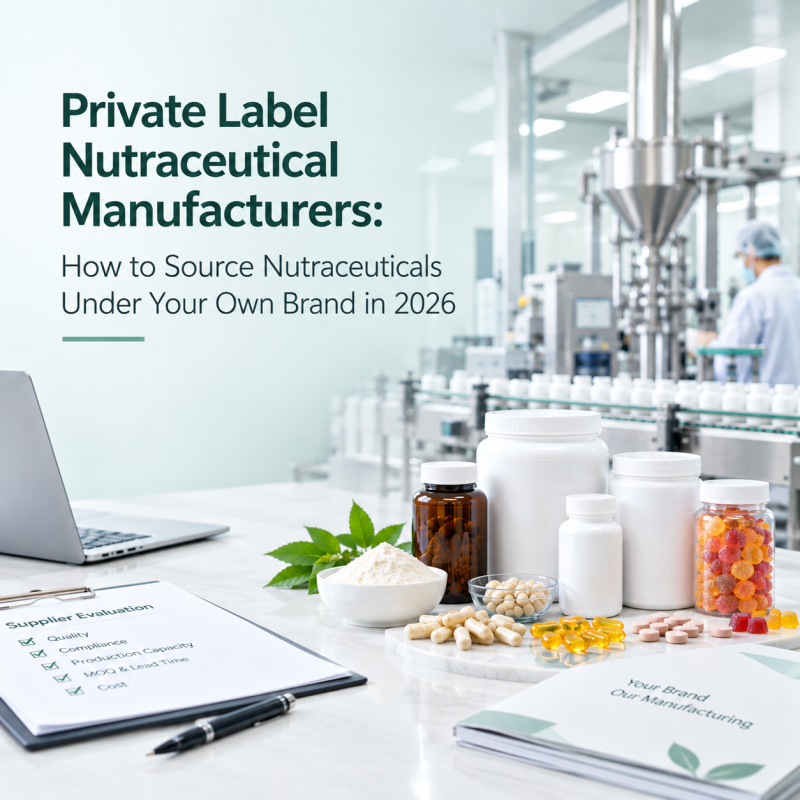
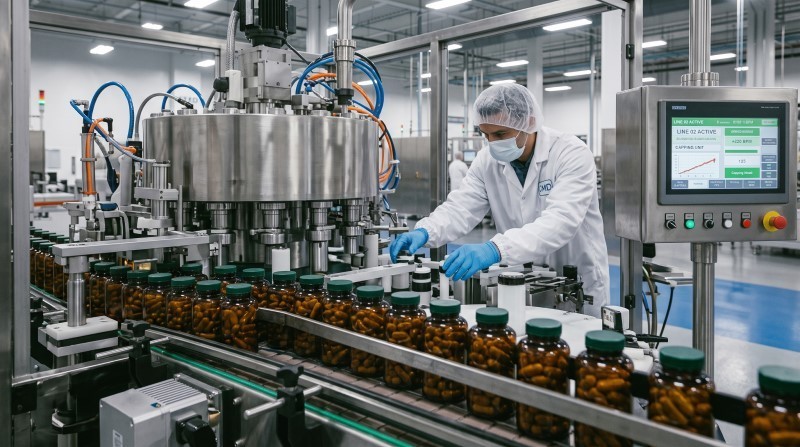
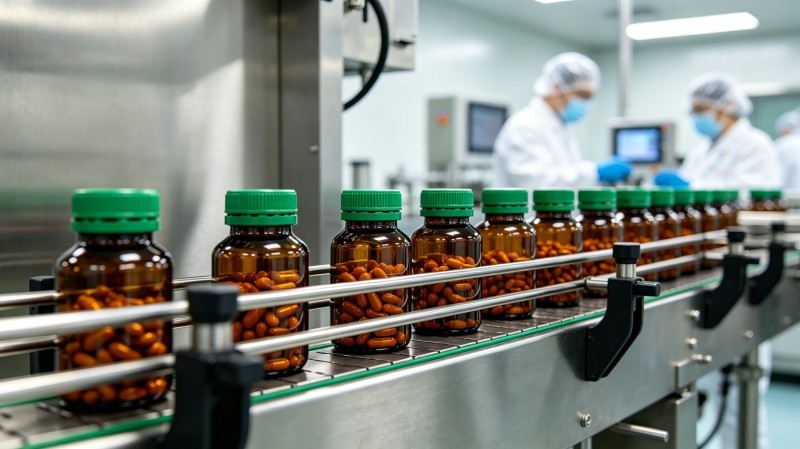
A private label nutraceutical manufacturer produces vitamins, minerals, botanicals, and functional ingredients under your brand name — you own the label, the customer relationship, and the margin, while the factory handles formulation support, production, and packaging. Sourcing correctly comes down to five decisions: define your formula and dosage form, verify cGMP and regulatory compliance, review samples and batch documentation, compare total landed cost rather than per-unit price, and start with a single SKU before scaling. This guide walks through each step in order. In a nutraceutical private label arrangement, you choose a finished product from the manufacturer’s existing formula (or a lightly customized version) and sell it under your own brand. The manufacturer formulates, fills, labels, and usually packages the product; you own the brand, the marketing, and the distribution. The term nutraceutical — coined by Dr. Stephen DeFelice in 1989 — is an industry term for products containing nutrients, botanicals, or other functional ingredients, not a regulated category in itself. In the US, many such products are regulated as dietary supplements when they meet the legal definition, and the FDA does not approve dietary supplements before they are marketed (Dietary Supplement Health and Education Act of 1994).[1] In the EU, classification depends on the product, its ingredients, and intended use. For sourcing, responsibility sits with the brand owner — you, not the government, are accountable for safety, labeling, and substantiated claims — which is why a manufacturer’s cGMP compliance, quality control, and testing systems should be an essential part of your supplier audit. What you can outsource depends on the model you choose. A private label supplier offers a ready-made formula across standard dosage forms — capsules, softgels, tablets, gummies, powders, and liquid drops — and applies your branding. A contract or OEM partner develops a formula to your specification. For a side-by-side comparison of the models, see our article on white label vs private label supplement manufacturing. Most brand owners start with private label to test the market, then move to custom formulation once demand is validated. The most common reason a nutraceutical sourcing project stalls is an underspecified brief. Lock down your dosage form, formula type, target market, order volume, and certification requirements before you send your first inquiry — a precise brief is what turns into an accurate quote. Start with the dosage form — it drives your MOQ, per-unit cost, and shelf life, and a gummy specialist is not automatically a softgel specialist. Then choose between a stock formula (pre-formulated and validated — lower MOQ, shorter timeline) and a custom formula (differentiation at higher development cost and larger minimum orders). Next, define your target market, because it determines your compliance stack. For the US, the manufacturer should operate to 21 CFR Part 111 cGMP for dietary supplements.[2] For the EU, food supplements must comply with the applicable EU and member-state requirements, including Directive 2002/46/EC; nutrition and health claims are governed by Regulation (EC) No 1924/2006 and related rules.[3] If a supplier cannot clearly explain how its production and documentation support your target-market requirements, treat them as a risk factor for further review or elimination. Finally, state your order volume and any compliance or certification requirements you need (cGMP compliance, NSF/ANSI 455-2, ISO 22000, HALAL, or organic) in the brief itself. Your requirements brief should answer, at minimum: Shortlist on three non-negotiables — cGMP compliance and facility registration, proven capability in your dosage form, and an MOQ you can actually fund — then narrow the list by lead time, geography, and customer references. First, separate “FDA registered” from “FDA approved.” Supplement facilities register with the FDA, but registration is not approval, and the FDA does not issue a certification for supplement facilities. What you should verify is the manufacturer’s compliance with the applicable dietary supplement cGMP requirements (21 CFR Part 111), supported where applicable by a valid third-party certification or audit record such as NSF or USP.[2][4] For a broader framework on evaluating manufacturers, see our guide to how to choose a health supplement manufacturer. Second, verify dosage-form capability. Ask which formats the factory runs on dedicated lines, and request batch photos or a specification sheet for that specific format. A manufacturer that claims every format but specializes in none is a warning sign. Third, check the MOQ against your working capital. MOQ varies by dosage form, formula, ingredients, and packaging — FORNUTRA’s current reference MOQ, for example, starts around 500 bottles for capsules, gummies, and drops, 200 kg for powder, and 5,000 bottles for softgels.[5] Choose a supplier whose trial order you can afford without overcommitting inventory. For a deeper walkthrough, see our guide to finding a reliable supplement contract manufacturer. Score each candidate on four pillars — certifications, dosage-form equipment, capacity and lead time, and quality control — using documents rather than sales claims. A capability comparison separates serious partners from resellers. What matters is not the number of logos on a website but which certifications are current, which dosage forms run on dedicated lines, and whether the factory can show a real batch record. Before you commit, order a branded pilot batch and request the certificate of analysis (COA) and supporting test results for that exact batch — the sample is the product you will actually sell, and its documentation is your proof of identity, purity, and potency. Ask for a small pilot batch — typically 50 to 200 units — with your label and packaging, and review it for taste, appearance, and stability. In parallel, request the COA for that batch plus third-party test results; reputable manufacturers test identity, purity, and potency against recognized standards where applicable.[4] For a buying decision, what matters is the verification chain you can hold a supplier to: supplier qualification, ingredient verification, batch testing, and traceability. The FDA’s cGMP framework (21 CFR Part 111) exists precisely because finished-product quality is only as good as the controls behind it, and finished products should be tested for identity, purity, and potency — where applicable, against USP or other recognized monograph standards, combined with product-specific specifications.[2][4] Require this chain in writing before you sign. Request these documents before you sign a purchase order: Per-unit price is only part of your landed cost. Require a line-item quote that separates formula development, raw materials, filling, packaging, testing, and freight — otherwise hidden fees will erase the margin you modeled. Two factories can quote the same per-bottle price and deliver different total costs, because the difference hides in how items are bundled. A transparent manufacturer itemizes; a less transparent one folds costs into a single number and collects the difference later as change fees. Compare quotes line by line, and treat any supplier that refuses to itemize as a risk. A ready-made private label order moves through five phases — specification lock, artwork approval, sample approval, full production, and QC release with shipment — with FORNUTRA indicating sample approval of about one week and production and delivery of about 4–6 weeks, depending on the product. Starting from a proven formula and standard packaging, expect sample approval of about one week, then production and delivery of about 4–6 weeks.[5] Custom formula adjustments add one to three weeks, and full custom OEM development can run six to twelve. Before production, confirm the purchase order states the exact specification, COA requirement, delivery date, and ownership of the formula and master files. Launch with one SKU on a proven formula, validate demand and repeat purchase, then expand dosage forms or move to a custom formula with the same manufacturer — keeping one supplier avoids re-qualifying and re-testing a new factory. The fastest path from first SKU to a full line is to stay with a partner that can grow with you. After your initial run, review sell-through, returns, and feedback to decide whether to reorder as-is, adjust potency or flavor, or develop a custom formula. Because the manufacturer already holds your specifications, artwork, and testing files, each expansion cycle is faster and cheaper than onboarding a new supplier. For the end-to-end sequence from concept to shelf, see our guide to launching your own health supplement brand. FORNUTRA is a private label and contract nutraceutical manufacturer offering capabilities relevant to the supplier-assessment criteria above: 6,000+ ready-made supplement formulas, multi-dosage-form production capability, cGMP-compliant production systems, flexible MOQs for selected products, and a path from sample approval to custom formulation development. FORNUTRA operates three advanced manufacturing bases with 20+ automated production lines and a Class 100,000 GMP cleanroom, with cGMP compliance, FDA facility registration, and BRC, ISO 22000, NSF, and HALAL certifications.[6] These address the capability and compliance pillars in this guide; the remaining checks — samples and documents — run through a sample-approval stage before production. Begin with a ready-made private label supplement manufacturing formula, then move into custom R&D and formulation as demand grows — without switching suppliers. A nutraceutical private label covers vitamins, minerals, botanicals, and functional ingredients — a broader and often more complex range than a standard supplement private label. The sourcing process is the same, but nutraceutical projects usually carry a higher testing burden (identity, purity, and potency per active), so you should demand stronger COAs and third-party results from the manufacturer. Most experienced manufacturers provide label review and supporting documentation — such as facility registration, cGMP compliance records, and COAs — but the brand owner retains legal responsibility for claims and compliance. Confirm in writing exactly which documents the factory will supply for your target market, and have labels reviewed against your market’s rules (21 CFR 111 in the US; Regulation (EC) No 1924/2006 for EU health claims). Yes. Many brands start with one SKU to validate demand before expanding the product line. MOQ, dosage form, formula, packaging, and testing requirements should be confirmed with the manufacturer before placing the first order. There is no fixed per-unit price — cost depends on dosage form, formula, active-ingredient cost, bottle count, packaging, and order volume. That is why you should compare line-item quotes (formula, raw materials, filling, packaging, testing, and freight) rather than a single number, and confirm your total landed cost before signing. MOQ varies by dosage form, formula, packaging, and project requirements. FORNUTRA currently offers selected low-MOQ options for market testing, with specific quantities confirmed according to the product specification. Ready to source nutraceuticals under your own brand? Tell FORNUTRA your dosage form, target market, and order volume to get a format-specific MOQ and cost estimate — Contact FORNUTRA for a project quote.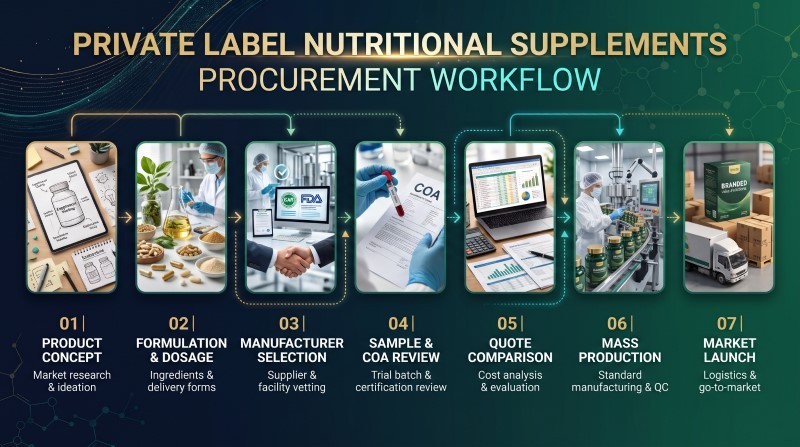
1. What Is a Nutraceutical Private Label — and What Does a Manufacturer Actually Deliver?
Aspect
Nutraceutical-Focused Private Label
General Supplement Private Label
Product range
Vitamins, minerals, botanicals and functional ingredients
Vitamins, minerals, botanicals and other dietary ingredients
Formulation
May involve standardized extracts, probiotics, specialty ingredients, or multi-ingredient formulas
Can range from simple single-ingredient products to complex formulas
Technical focus
Ingredient specifications, compatibility, stability, and testing may require closer review
Requirements depend on ingredients, dosage form, and target market
Sourcing focus
Ingredient sourcing, formulation capability, documentation, and target-market compliance
Formula, dosage form, quality control, documentation, and compliance
Best for
Brands seeking differentiated or function-focused product concepts
Brands across a broad range of supplement categories
2. Define Your Sourcing Requirements Before You Contact a Manufacturer
3. How to Shortlist Private Label Nutraceutical Manufacturers
4. Compare Manufacturer Capabilities: Certifications, Equipment, and Capacity
Request from the manufacturer
What it actually verifies
cGMP compliance evidence + audit summary
Quality system — documented controls, not a marketing claim
Facility registration + address (match to audit)
Legitimacy — the plant exists and is registered
Dedicated line list per dosage form
Capability — real equipment for your format
Daily capacity and lead-time matrix
Capacity — can they meet your order and scale?
Batch record from a comparable product
Traceability — full process control and documentation
Third-party test results (identity, purity, potency)
Quality — product meets label claims
Two or three customer references
Reliability — delivery and support track record
5. Sample and Document Review: Verify Before You Commit
6. Compare Quotes Beyond the Per-Unit Price
Line item
What it covers
Hidden charge to watch for
Formula development
Stock selection or custom R&D and stability work
“Free” formula that locks you into that factory
Raw materials
Active and excipient ingredient cost
Commodity markup or undisclosed substitutions
Filling / production
Labor and machine time per batch
Setup or line-change fees on small runs
Packaging
Bottles, caps, seals, labels, cartons
Plate or die fees, minimum label quantities
Testing
COA, microbiological, and third-party tests
Quoting only in-house tests, then charging for third-party
Freight & duties
Shipping, insurance, import duties
Ex-works pricing that excludes freight entirely
7. From Purchase Order to First Production Run
8. Scaling From Your First SKU to a Full Nutraceutical Line
9. Work With FORNUTRA to Source Nutraceuticals Under Your Brand
Frequently Asked Questions
What is the difference between a nutraceutical private label and a supplement private label?
Do nutraceutical private label manufacturers handle regulatory paperwork?
Can I start with one nutraceutical SKU?
How much does private label nutraceutical manufacturing cost per unit?
What is the MOQ for private label nutraceutical products?
References