Probiotic and Collagen Supplement Manufacturing: Specialized Production Guide for High-Demand Categories
- Share
- publisher
- FORNUTRA
- Issue Time
- Aug 7,2026
Summary
A comprehensive B2B guide for brands evaluating probiotic supplement manufacturers and collagen supplement manufacturers, covering production, quality testing, dosage forms, and OEM partner selection.
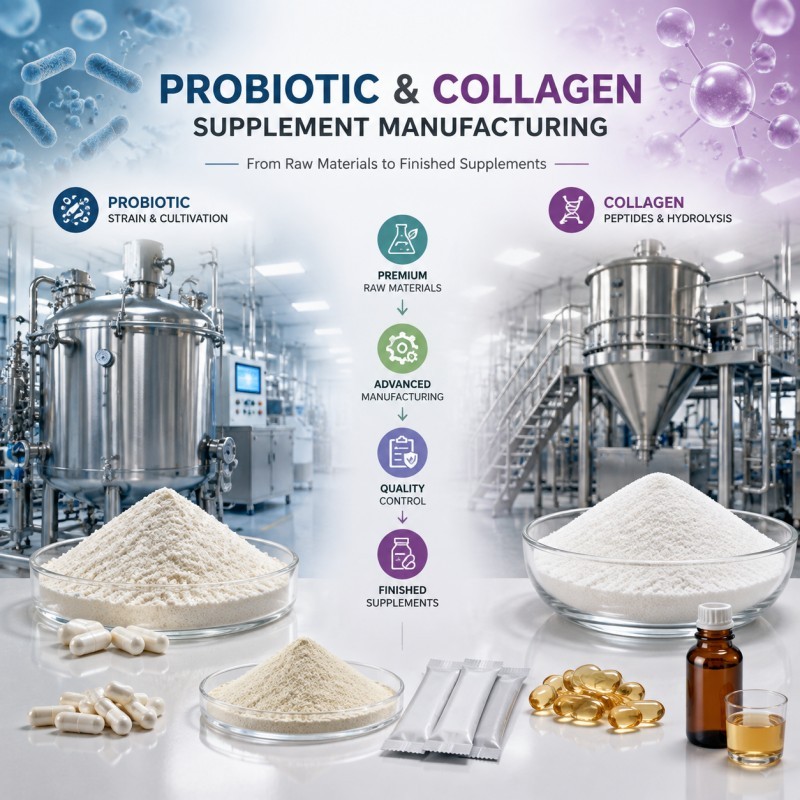
For brand owners, private label entrepreneurs, and importers entering the dietary supplement market, identifying the right manufacturing partner is the single most consequential business decision. Two categories dominate global demand — probiotics and collagen — yet finding probiotic supplement manufacturers and collagen supplement manufacturers with genuine technical expertise, not just marketing claims, remains a persistent sourcing challenge. This guide explains what brands should evaluate, which production capabilities matter, and how FORNUTRA helps clients move from formula concept to finished product with reduced risk and faster time to market. Producing commercial-grade probiotics is fundamentally different from manufacturing standard vitamins or minerals. The active ingredients are living microorganisms, and every production decision — from strain sourcing to packaging material — affects whether the finished product delivers label-claimed potency at the point of consumption. Brand owners evaluating probiotic supplement manufacturers should understand the core technical requirements before entering supplier discussions. The foundation of any probiotic product lies in strain selection. Reputable probiotic supplement manufacturers maintain comprehensive strain libraries with documented identification, stability profiles, and application data — and they can explain exactly which strains perform best for your target market and dosage format. Key factors brand owners should evaluate include: Freeze-drying remains the industry-standard method for converting liquid probiotic cultures into stable powder forms. The process involves freezing the culture at ultra-low temperatures, then applying vacuum to sublimate water directly from solid to vapor. This preserves cell wall integrity far better than heat-based drying methods. Leading probiotic supplement manufacturers invest in pharmaceutical-grade lyophilization equipment with precise temperature ramp control and in-process viability monitoring — capabilities that directly translate into higher finished-product potency for your brand. Maintaining probiotic viability from production through the end of shelf life is the single greatest technical challenge in this category. Several interconnected factors determine whether a product delivers label-claimed potency at the point of consumption: Most brands searching for probiotic supplement manufacturers are ultimately looking for a reliable production partner, not just a technical capability list. Here is a practical evaluation framework to apply during supplier assessment: FORNUTRA's probiotic team provides strain-specific overage recommendations and stability data during the quotation stage — not after you commit. This allows brand owners to evaluate commercial viability before investing in development. Collagen supplement manufacturing requires distinct technical capabilities compared to probiotic production. While probiotics demand biological expertise, collagen manufacturing centers on protein extraction, hydrolysis, and purification. The quality of the final product depends on raw material sourcing decisions and process control parameters — areas where experienced collagen supplement manufacturers differentiate themselves from generalist contract manufacturers. Understanding collagen types is fundamental for brand owners developing targeted product lines. Each type has different structural properties and application suitability: One of the most frequent questions from brand owners entering the collagen category involves raw material sourcing. The choice between marine (fish-derived) and bovine (cattle-derived) collagen significantly impacts product positioning, cost structure, and target consumer segments: For brand owners developing differentiated product lines, understanding these source characteristics enables better supplier conversations. A collagen manufacturer for nutraceuticals should be able to provide both marine and bovine options, present documented sourcing certificates, and explain how raw material origin affects final product characteristics like solubility, taste, and color. The production of hydrolyzed collagen peptides — the most common form used in supplements — follows a controlled multi-stage process. Professional collagen supplement manufacturers differentiate themselves through process optimization at each stage: For brand owners seeking a reliable collagen manufacturer for nutraceuticals, the ability to provide consistent molecular weight profiles batch after batch is a key differentiator. Variations in peptide size distribution can affect product solubility, taste, and consumer experience — all factors that directly impact brand reputation and repeat purchase rates. The market for combination formulas pairing probiotics with collagen peptides has expanded significantly as brands seek differentiated positioning in crowded supplement categories. For contract manufacturing partners, these hybrid formulations create both opportunities and technical complexity. Why combination formulas attract brand investment: Combined probiotic-collagen products offer a compelling value proposition — addressing multiple consumer needs in a single daily serving. They simplify consumer routines, increase perceived product value, and create distinct shelf presence compared to single-ingredient competitors. For Amazon and e-commerce brands, combination formulas also help differentiate against the thousands of single-ingredient supplement listings competing for the same keywords. However, formulation challenges must be carefully managed. An experienced collagen manufacturer for nutraceuticals can help brands balance ingredient compatibility, dosage requirements, and production efficiency when developing combination formulas. Key technical considerations include: Working with an integrated collagen manufacturer for nutraceuticals that also maintains probiotic production capability enables single-source formulation development. Rather than coordinating between separate suppliers — each with different lead times, minimum orders, and quality systems — brand owners benefit from one partner managing compatibility testing, stability studies, and production under a unified quality framework. Selecting the right dosage form for probiotic and collagen products involves balancing stability requirements, consumer preferences, production costs, and market positioning. The table below summarizes the primary options available through OEM manufacturing: Independent third-party testing is not optional for brands entering regulated supplement markets. It serves as the objective verification that manufacturing quality claims translate into actual product performance. When evaluating supplement manufacturers, brand owners should confirm that the following testing capabilities are integrated into the quality system — not outsourced on an ad hoc basis: Before finalizing a manufacturing partnership, request a sample COA and verify that the OEM facility maintains ISO 17025-accredited internal laboratory capability or established relationships with accredited external labs. Facilities claiming third-party testing without documented lab accreditation should be evaluated with additional scrutiny. FORNUTRA provides complete COA documentation with every production batch, including raw material traceability to lot level. Many supplement manufacturers can provide production capacity, but successful product launches require more than manufacturing. FORNUTRA combines formulation support, dosage form flexibility, quality documentation, and export experience to help brands reduce development risks and accelerate market entry. What separates FORNUTRA from other supplement manufacturers is how these capabilities translate into outcomes that brand owners, Amazon sellers, Shopify DTC brands, and importers actually care about: faster time to market, fewer supplier coordination headaches, and documentation that clears customs without delays. FORNUTRA supports brands from initial concept evaluation to commercial production, helping customers optimize formulas based on target markets, dosage forms, and competitive positioning. Whether you arrive with a complete specification or a rough product brief, our formulation team guides ingredient selection — including strain matching for probiotics and collagen type sourcing — without treating routine formulation work as a separate billable service. This integrated approach means technical feasibility is evaluated during quotation, not after commitment. Unlike single-category suppliers, FORNUTRA provides integrated manufacturing solutions across probiotics, collagen peptides, vitamins, gummies, powders, capsules, and functional supplements. For brand owners, this eliminates the operational burden of managing separate manufacturers for different SKUs — each with their own minimum order quantities, lead times, and quality documentation formats. Key production formats include powder manufacturing, capsule filling, tablet compression, liquid production, and gummy manufacturing — all under one GMP-certified quality management system. FORNUTRA offers flexible MOQ programs designed for brands at launch stage, not just established volume buyers. This is especially valuable for Amazon private label sellers and Shopify DTC brands testing new product concepts before committing to large production runs. As your volume scales, our production capacity scales with you — without requiring you to re-qualify a new supplier. FORNUTRA has extensive experience supporting international brands with documentation preparation, packaging customization, and market-specific regulatory requirements. Our export-ready delivery includes certificates of origin, free-sale certificates, product dossiers, allergen statements, and region-specific compliance documentation for importers serving the EU, North America, Southeast Asia, and Middle East markets. For distributors and importers, this means shipments arrive with documentation that meets destination-country requirements on the first attempt — reducing customs clearance delays that erode margin and disrupt inventory planning. As established supplement manufacturers with dedicated production lines for moisture-sensitive and temperature-sensitive formulations, FORNUTRA maintains the infrastructure required for consistent probiotic and collagen production at commercial scale. Explore our full product catalog or learn about our private label supplement services. Whether you are launching a new Amazon private label brand, expanding a Shopify DTC product line, or sourcing for an import distribution business, FORNUTRA's technical team is available to discuss your project requirements. Our quoting process includes formula feasibility review, dosage form recommendations, and MOQ options — without obligation. Brand owners should prioritize probiotic supplement manufacturers with documented strain identification, GMP-certified low-humidity production suites, in-house stability testing capability, and transparent overage calculation methodology. The facility's environmental control systems — particularly temperature and humidity management during blending and encapsulation — directly determine finished product quality. During evaluation, request strain deposit certificates, audit reports, and sample Certificates of Analysis. Clear communication during the inquiry phase is a strong indicator of the experience you will have during production. Manufacturing costs vary significantly based on formula complexity, selected dosage form, order quantity, packaging specifications, and required testing scope. Powder formats with standard packaging typically have lower per-unit costs than capsules or liquid shots. Minimum order quantities (MOQ) are a major cost factor — lower MOQ programs typically have higher per-unit pricing but allow brand owners to test market demand before committing to volume production. Rather than publishing generic pricing that would be misleading, FORNUTRA provides itemized quotations based on your specific formula, dosage form, packaging, and order volume. Submit your project details for a customized quote with MOQ options and lead time estimates. Professional collagen supplement manufacturers maintain quality through raw material traceability programs, enzymatic hydrolysis process control, molecular weight distribution verification, and comprehensive finished product testing. Key quality indicators include protein content (typically >90%), consistent peptide molecular weight profiles, and compliance with microbiological and heavy metal specifications. Request hydroxyproline assay results and molecular weight distribution data as part of your supplier qualification — not just total protein claims. Yes, combined probiotic-collagen formulations are technically feasible and represent a growing market segment. The most practical approach involves dry powder blending in stick pack or jar formats, where both ingredients remain in a low-moisture environment. Working with experienced supplement manufacturers that have expertise in both categories simplifies compatibility testing, stability studies, and single-source production logistics. Most combination products use powder formats to accommodate the higher per-serving dose required for effective collagen delivery alongside probiotic cultures. Pre-launch testing should include hydroxyproline content verification (to confirm collagen protein levels), molecular weight distribution analysis, full microbiological screening, heavy metal testing, and accelerated stability studies. Many markets also require allergen testing and species identification via PCR for bovine, porcine, or marine source verification. Working with collagen supplement manufacturers that provide complete pre-launch testing documentation — not just pass/fail summaries — gives brand owners the documentation needed for marketplace compliance and retailer onboarding. Common dosage forms include powders (stick packs, jars), capsules (HPMC or gelatin), tablets, liquids (shots, drops), and gummies. For probiotics, capsules and powder formats generally offer the best stability. For collagen, powders accommodate the higher per-serving doses (5-10g) most effectively. Supplement manufacturers with multi-format production lines can help brands select the optimal delivery format based on ingredient stability characteristics, target consumer preferences, and distribution channel requirements. Many professional supplement manufacturers offer multiple production categories including probiotics, collagen peptides, vitamins, and fish oil supplement manufacturers operating dedicated softgel lines. However, brand owners should verify that the facility maintains separate production environments for live microorganisms versus other product types — shared air handling systems or blending equipment create cross-contamination and viability risks. The best manufacturing partners maintain category-specific production suites with documented environmental controls for each product type.Probiotic Supplement Manufacturing: Key Production Requirements
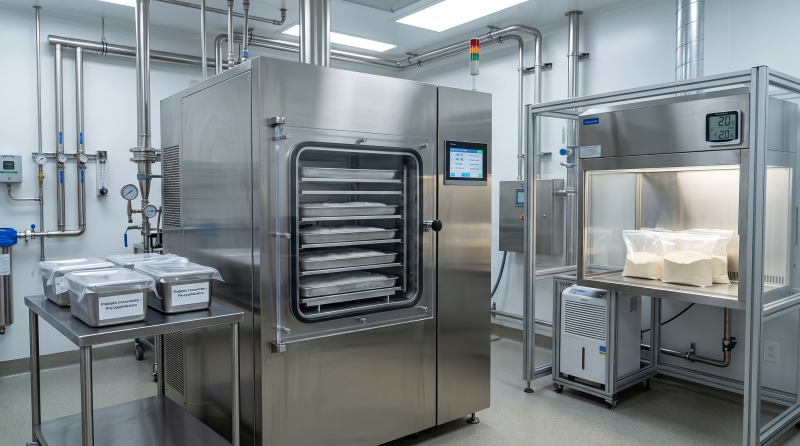
Strain Selection, Freeze-Drying Technology and Viability Protection
Stability and Shelf Life Challenges for Probiotic Supplement Manufacturers
What Brands Should Evaluate When Selecting Probiotic Supplement Manufacturers
FORNUTRA Advantage
Collagen Supplement Manufacturing: Process and Quality Standards
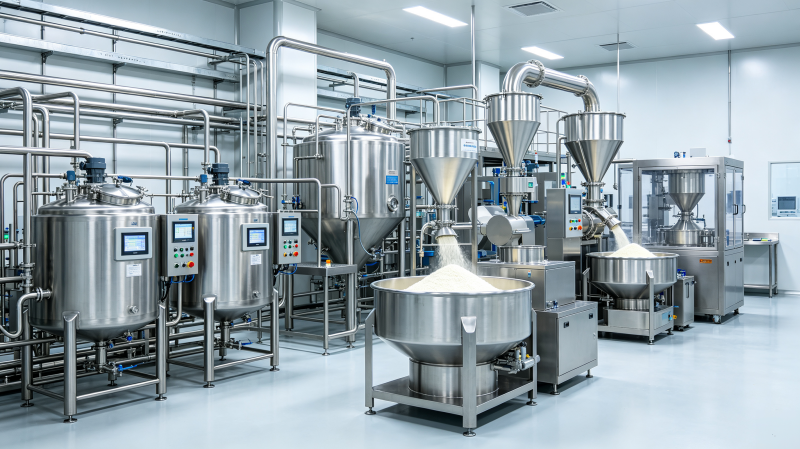
Type I, II and III Collagen — Differences and Applications
Collagen Type Primary Source Key Characteristics Common Product Applications
Type I
Bovine hide, fish skin/scales
Most abundant type; forms dense fibers with high tensile strength
Beauty-from-within powders, drink mixes, daily wellness capsules
Type II
Chicken sternum cartilage
Forms fibrillar networks in cartilage tissue; contains glycosaminoglycans
Joint-focused formulations, mobility support blends
Type III
Bovine hide (co-extracted with Type I)
Forms reticular fibers; often present alongside Type I in commercial extracts
Multi-collagen complex products, premium beauty formulations
Marine vs Bovine Collagen Sources
Source Advantage Target Application Consumer Perception
Marine Collagen
(fish skin/scales)Predominantly Type I; smaller peptide size in many commercial grades; suitable for pescatarian markets
Premium beauty supplements, anti-aging formulations, liquid collagen shots
Perceived as higher quality; commands premium retail pricing
Bovine Collagen
(cattle hide)Type I & III blend; cost-effective at commercial scale; well-established supply chain with consistent availability
Daily collagen powders, multi-collagen complex products, sports nutrition blends
Mainstream acceptance; preferred for value-positioned product lines
Hydrolyzed Collagen Production Process for Collagen Supplement Manufacturers
Combined Probiotic + Collagen Formulations: A Growing Trend
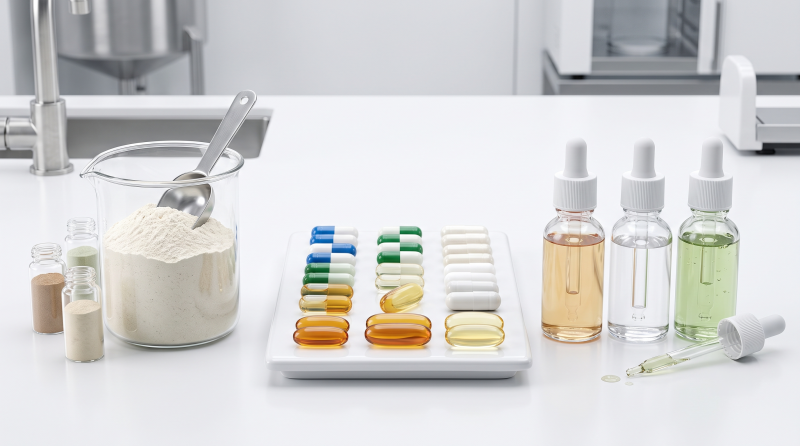
Dosage Form Options: Powders, Capsules and Liquids
Dosage Form Advantages Suitable Applications Manufacturing Considerations
Powder Supplements
High payload capacity; flexible dosing; minimal excipients; suitable for high-dose collagen (5-10g)
Collagen peptides, probiotic blends, combined probiotic-collagen formulas, sports nutrition
Requires controlled-humidity environment; stick pack or jar packaging with desiccant; particle size uniformity critical for mixability
Capsules
Precise dosing; oxygen and moisture barrier when blister-packed; consumer convenience; taste masking
Probiotic strains, lower-dose collagen supplements, multi-strain formulations
Capsule shell compatibility (HPMC for moisture-sensitive fills); low-humidity filling suites; encapsulation speed vs. CFU preservation balance
Liquid Supplements
Fast absorption; easy consumption; premium positioning; suitable for liquid collagen shots
Ready-to-drink collagen beverages, liquid probiotic drops, single-dose vials
Most challenging format for probiotics due to water activity; requires aseptic filling; preservative system compatibility; cold-chain distribution often necessary
Third-Party Testing Requirements for Probiotic and Collagen Manufacturing
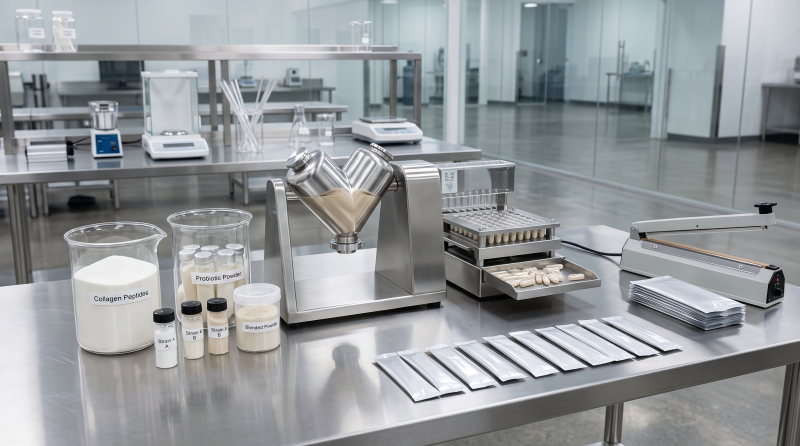
Live Cell Count, Collagen Content Verification
Quality Due Diligence
From Formula Development to Finished Product: Why Brands Choose FORNUTRA
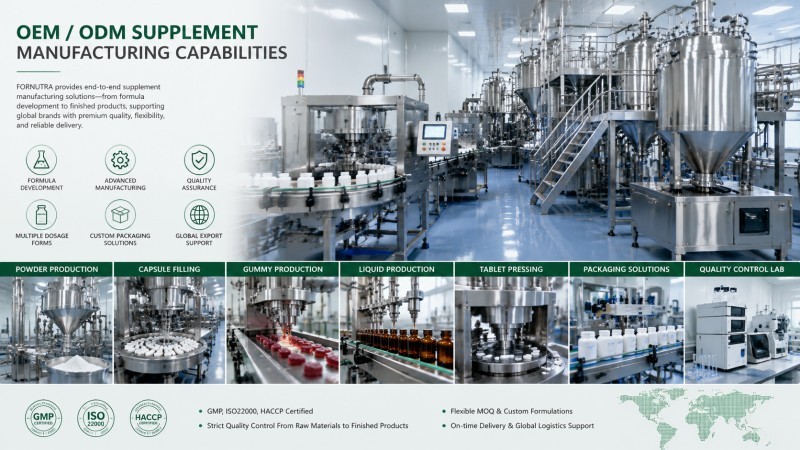
Flexible Product Development
Multi-category Manufacturing Capability
Built for Brand Scalability
Global Export Support
Discuss Your Probiotic or Collagen Project with FORNUTRA
Frequently Asked Questions About Probiotic and Collagen Supplement Manufacturing
What Should Brands Look for in Probiotic Supplement Manufacturers?
How Much Does Custom Probiotic or Collagen Supplement Manufacturing Cost?
How Do Collagen Supplement Manufacturers Ensure Product Quality?
Can Probiotic and Collagen Supplements Be Combined in One Formula?
What Testing Is Required Before Launching a Collagen Supplement?
What Dosage Forms Are Available for Custom Supplement Manufacturing?
Can the Same Supplement Manufacturers Produce Probiotics, Collagen, and Fish Oil Products?