Sleep Nutraceuticals Neuroscience: What Brands Should Know in 2026
- Share
- publisher
- FORNUTRA
- Issue Time
- Nov 18,2026
Summary
Sleep and cognitive supplements work through four well-studied pathways - GABAergic, melatonin, adaptogenic and magnesium-related - but the clinical evidence behind each ingredient is not equal. This 2026 guide for brand and product teams explains the mechanisms, ranks ingredient evidence, and covers compliant claims, dosage-form choices and melatonin gummy manufacturer selection.
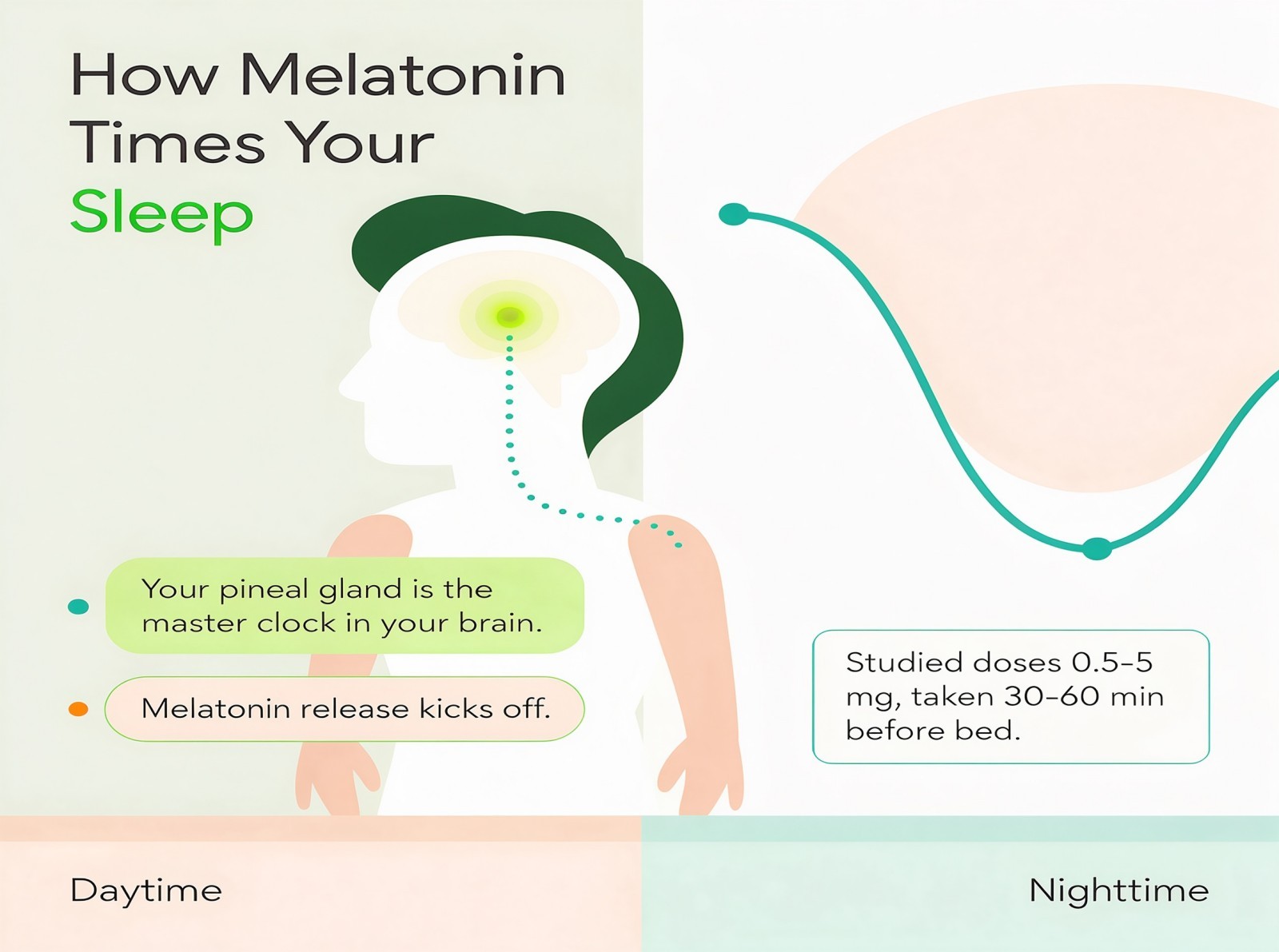
Direct Answer Sleep and cognitive supplements work through a small number of well-studied pathways — GABAergic, melatonin, adaptogenic and magnesium-related. The clinical evidence behind them is not equal: melatonin has the strongest trial support, magnesium glycinate and ashwagandha sit one tier below, and several botanicals remain largely preclinical. Brands should match each claim to the evidence tier, not the trend. Table of Contents Sleep and mood are among the fastest-growing corners of private label nutrition. The global insomnia supplements market was valued at roughly USD 4.3 billion in 2024 and is projected to reach about USD 12.6 billion by 2033 at a compound annual growth rate of 12.9%, with melatonin alone holding around a 36% product share (Grand View Research). The same pressure shows up in the clinic: roughly one in three people globally report dissatisfaction with their sleep, and 6–15% meet criteria for an insomnia disorder (Schuster et al., 2025). That demand is why so many brands are building sleep wellness supplements into their 2026 roadmaps. This guide explains the neuroscience in plain, product-manager language, ranks the evidence behind each ingredient, and walks through formulation, claims and manufacturing decisions — so a brand briefs on data, not on hype. Most sleep and cognitive ingredients act through one of four pathways. Knowing which pathway an ingredient touches — and how well it is evidenced — is the fastest way to judge whether a formula is coherent or just a label full of trend names. The literature on "bioactive nutraceuticals and food supplements in neurological and brain disease" is large and uneven. A widely cited 2020 review in the journal Nutrients (Williams et al.) surveyed this exact field and made a point brands should internalise: many compounds show promise in cell and animal models, but only a minority have human trial data strong enough to support a health claim. For a brand, that gap is a compliance line. The practical distinction is between two very different promises. A sleep-support product claims a modest, everyday benefit — helping someone wind down or fall asleep more easily. A disease claim — preventing or treating insomnia disorder, Alzheimer's, Parkinson's or depression — sits in a different regulatory category entirely, and the nutraceutical evidence there is frequently still at the preclinical or early clinical stage. Do not let a promising mouse study or a mechanistic review paper migrate into your product label. A manufacturer that flags this for you is protecting your brand; one that ignores it is not. A simple discipline for any formulation brief: grade each active by its evidence tier before it earns a place in the formula. The tiers below reflect the strongest current human data, ordered from most to least supported. A note on honesty: a sleep supplement formulation is not more credible simply because it stacks all four routes. Many well-evidenced actives have modest, overlapping effects, and a bloated formula makes dosing, stability and cost harder to defend. The strongest briefs lead with one or two well-evidenced actives and justify every additional ingredient. Choosing the dosage form is a business decision as much as a chemistry one. Each format shifts the audience, the dose ceiling and the manufacturing complexity. For a deeper look at how format drives repeat purchase, see our guide on why supplement format and taste decide repeat orders. On minimum order quantities and lead times: these vary substantially by dosage form, factory and market, and there is no industry-wide standard. Treat any single figure you are quoted as a reference point, not a promise — confirm the specifics against your target form and volume with each manufacturer before you budget a launch. The single biggest regulatory risk in this category is language. Under the U.S. Dietary Supplement Health and Education Act, supplements may make structure–function claims (for example, "supports relaxation" or "helps you wind down") but may not claim to treat, cure or prevent a disease. A sleep product that promises to "treat insomnia" or a cognitive product that promises to "prevent dementia" crosses into drug territory. Two specifics matter in the brain-health space. First, melatonin is a hormone; markets such as the EU and the UK regulate it as a medicine or as a tightly controlled supplement ingredient, and dose and labelling rules differ by country. Second, the EFSA has not established a causal relationship between L-theanine and sleep, so an EU-facing label should avoid a direct sleep claim and lean on relaxation wording. For a full walk-through of label and claims obligations, see our custom supplement contract manufacturing overview, which covers the compliance checks a competent partner runs. Melatonin gummies are the category's flagship product, but they are also the one where manufacturing quality shows fastest. Melatonin degrades under heat and light, so a melatonin gummy manufacturer must manage dose accuracy through the cooking and setting process and validate stability over shelf life — not just weigh the input powder. Pectin-based, vegan gummies are now the standard ask, and sugar-free formats are rising for adult sleep lines. When shortlisting a partner, ask for evidence of dose-uniformity testing on the finished gummy, melatonin stability data across the target shelf life, and a clear position on whether your target market treats melatonin as a supplement or a medicine. For the technical side, our complete guide to nutraceutical gummy manufacturing and our tablet vs capsule vs gummy comparison go deeper. A cognitive wellness supplement lives on the safe side of the line when it promises support for focus, alertness or mental energy — not treatment of a condition. Caffeine-free nootropics built on L-theanine, Alpha-GPC or lion's mane are popular precisely because they let a brand talk about everyday mental performance without medical language. The discipline is the same as for sleep: match the claim to the evidence tier, keep dosage sensible, and have the substantiation on file before the label is printed. Start with our cognitive wellness supplements range to see how ready-made formats are positioned. FORNUTRA (Guangzhou Bai Zhitang Health Industry Co., Ltd.) brings more than 17 years in the health industry, serving 5,000+ brands across 50+ countries from more than 6,000 mature formulations. Production runs across 20 lines with a daily capacity of 3 million tablets and 2 million capsules inside an 8,000 m² GMP cleanroom, and we cover 20+ dosage forms — including gummies, capsules, tablets, stick powders and liquids for sleep and cognitive lines. Whether you are extending an existing sleep wellness supplements range, launching a cognitive wellness supplements line, or briefing a fully custom formula through our R&D formulations team, the same evidence-tier discipline applies — and our formulation team will push back where a claim or a dose does not hold up. If you are building a sleep or cognitive product in 2026, the fastest way to a defensible formula is a short review of your ingredient brief and target market. Contact our team to discuss your concept, or submit your specification for a formulation and compliance assessment before you commit to a launch plan. It depends on the wording and the market. In the U.S., a structure–function claim such as "supports relaxation" or "helps you wind down" is generally acceptable, but a claim to treat insomnia is a disease claim and can trigger drug status. In the EU, melatonin is tightly controlled and L-theanine has no EFSA-approved sleep claim, so labels must be more conservative. Always confirm claim language with a compliance review before printing. Claims that a product treats, cures, mitigates or prevents a disease — for example "treats insomnia", "prevents dementia" or "cures depression" — move a supplement into drug territory. Even indirect language that implies a disease indication can be risky. Structure–function language about supporting normal function is the safer, compliant space. It depends on the product promise. Melatonin is best for circadian timing (falling asleep faster, jet lag, shift work) and has the strongest trial support. Magnesium glycinate is better positioned for stress-related sleep and nervous-system relaxation, with moderate but real evidence. Many brands lead with melatonin and add magnesium as a supporting active, but a single-ingredient magnesium product can also stand alone for a calm, non-hormonal angle. Studied doses cluster at 0.5–5 mg, taken 30–60 minutes before bed, and higher doses are not reliably more effective. The right dose for your product also depends on your target market's regulatory limits — several countries cap melatonin per serving — so the formulation team should confirm the ceiling for each market before finalising the label.
Sleep Nutraceuticals Neuroscience: The Mechanisms Buyers Ask About
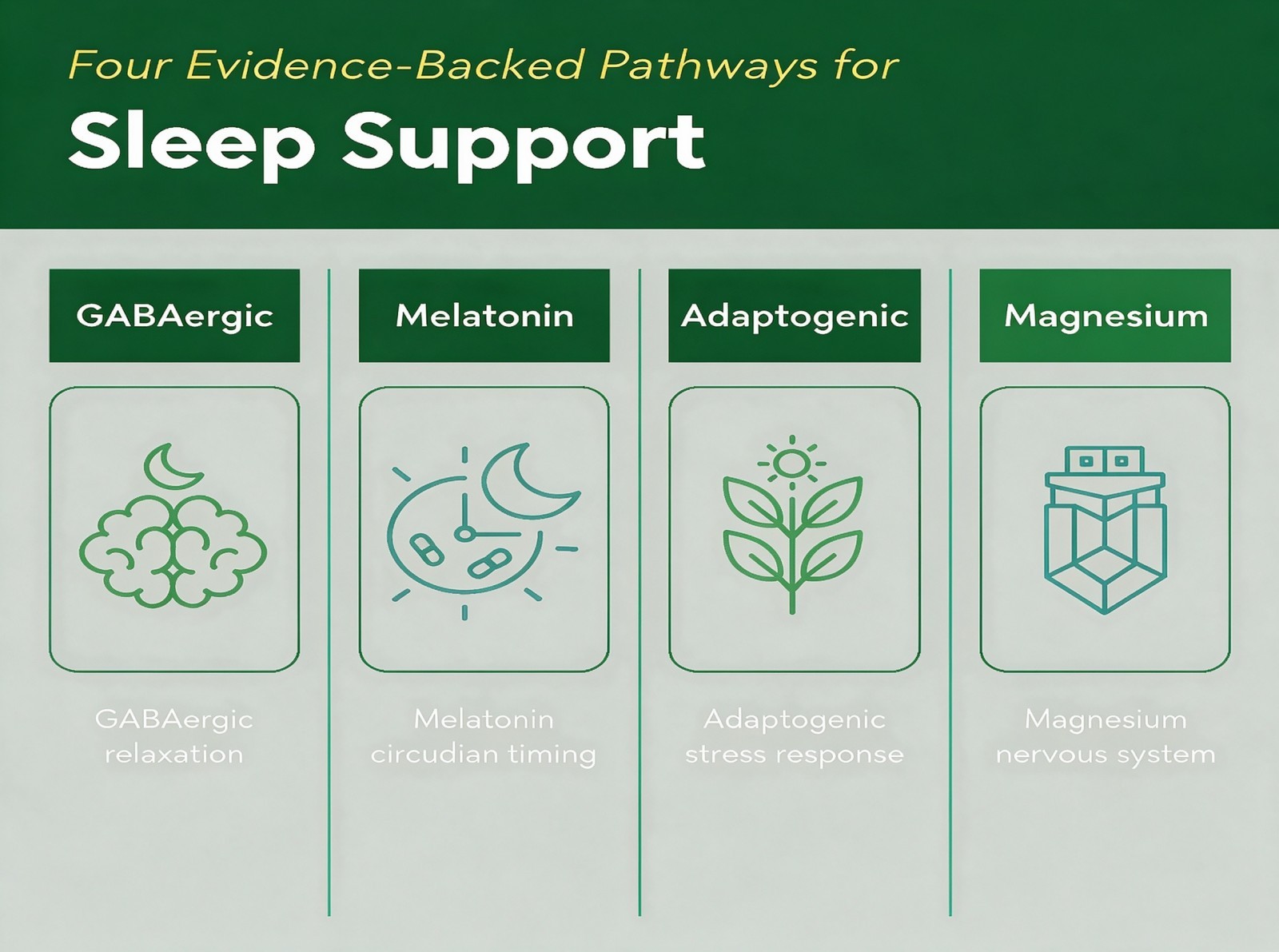
Bioactive Nutraceuticals and Food Supplements in Neurological and Brain Disease
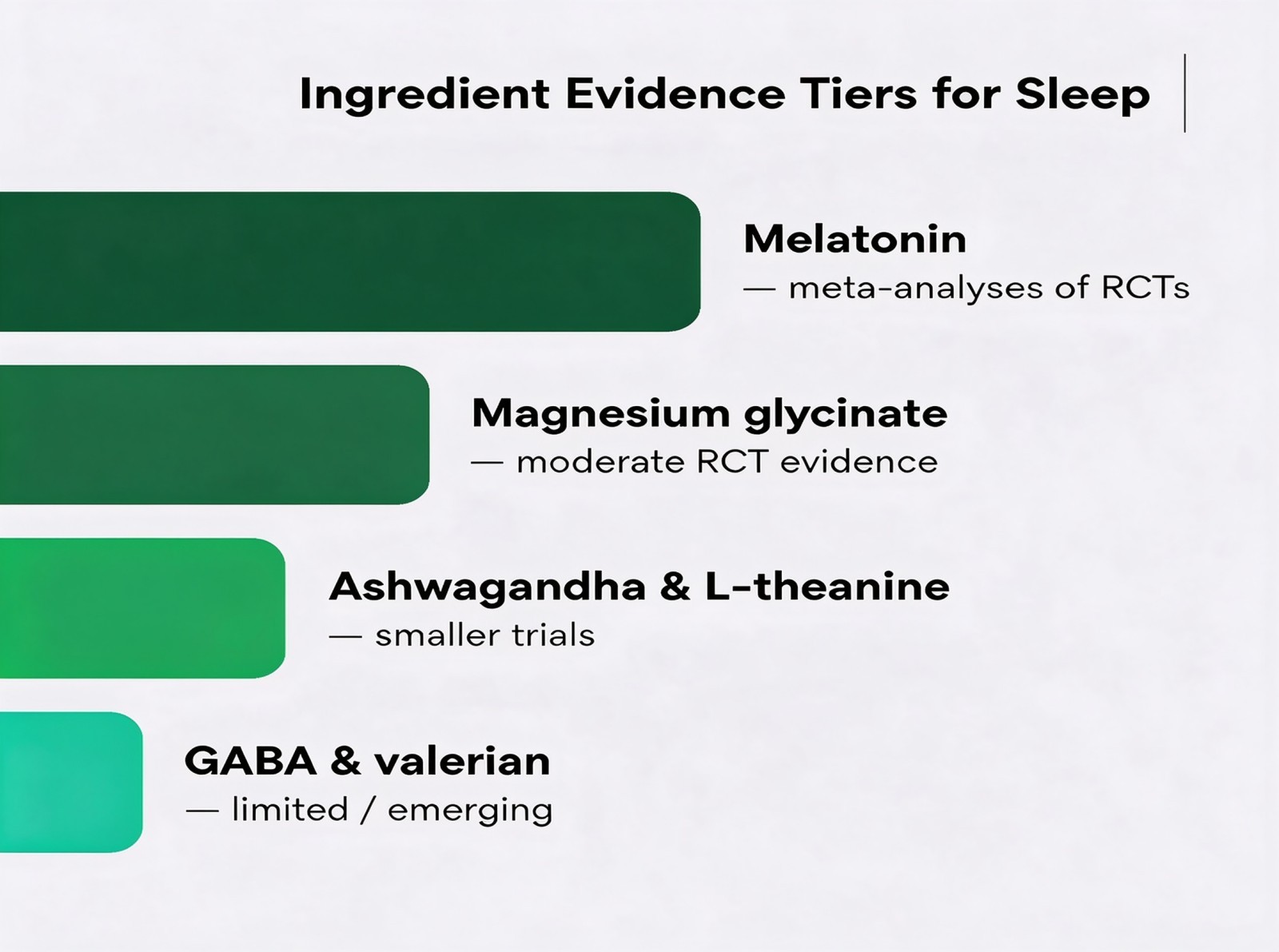
Ingredient Evidence Tiers for Sleep and Cognitive Products
Route
Representative ingredients
Primary mechanism
Evidence level
Typical studied dose
Melatonin
Melatonin
Circadian timing (MT1/MT2 receptors)
Strong — meta-analyses of RCTs
0.5–5 mg, 30–60 min before bed
Magnesium
Magnesium glycinate / bisglycinate
GABA modulation, HPA axis
Moderate — larger RCT, small effect
250–500 mg elemental
Adaptogens
Ashwagandha root extract
Stress / cortisol response
Moderate — meta-analysis of 5 small RCTs
600 mg+, 8 weeks or longer
Amino acids & GABA
L-theanine, 5-HTP, glycine, GABA
GABAergic relaxation, serotonin precursor
Emerging to moderate
L-theanine 200–450 mg
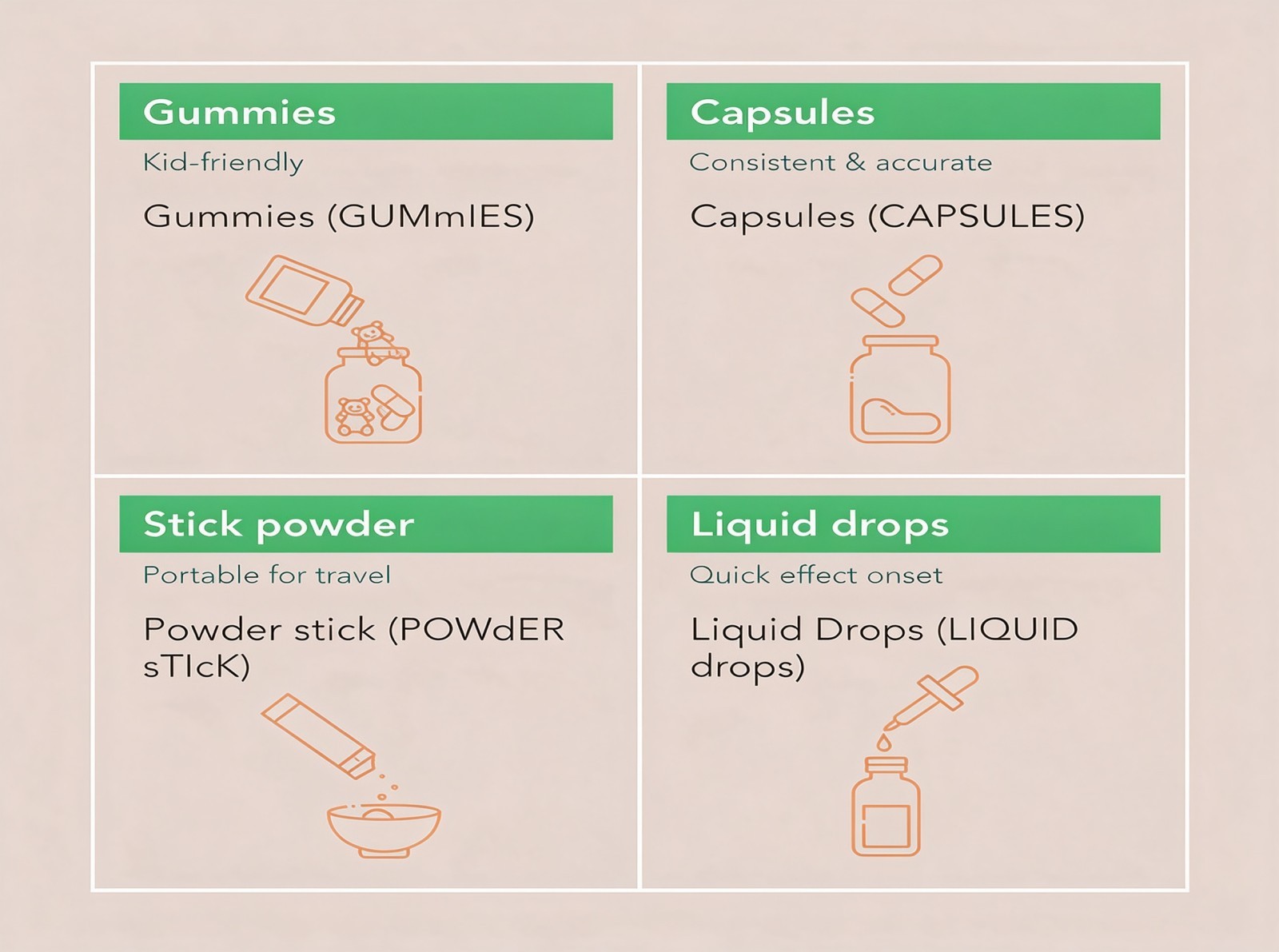
Sleep Supplement Formulation and Dosage-Form Choices for Brands
Dosage form
Strengths
Trade-offs
Best for
Gummies
Taste, convenience, strong repeat purchase
Dose ceiling, sugar/thermo stability, active degradation
Retail sleep gummies, melatonin
Capsules / tablets
Precise dosing, cost-efficient, long shelf life
Pill fatigue, less sensory appeal
Magnesium, clinical-style melatonin tablets
Stick powder
Portability, high dose flexibility
Solubility and taste masking needed
Evening drink-mix sleep powders
Liquid drops
Fast absorption, flexible micro-dosing
Stability, packaging and dosing precision
Melatonin drops, elder and pediatric formats
Claims That Stay Compliant for Brain Health Products
Melatonin Gummy Manufacturer Selection for Sleep Brands
Cognitive Wellness Supplement Positioning Without Drug Claims
Develop a Sleep or Cognitive Line with FORNUTRA
References
Talk to our formulation team
Frequently Asked Questions
Can a sleep supplement claim it improves sleep?
Which claims can trigger drug status for a sleep or cognitive product?
Melatonin or magnesium — which should a brand lead with?
What melatonin dose is best for a sleep product?