Supplement Packaging Design and Label Compliance for Private Label Brands: A 2026 Guide
- Share
- publisher
- FORNUTRA
- Issue Time
- Oct 10,2026
Summary
Explore supplement packaging design, label compliance, and custom packaging options for private label brands, from artwork preparation to production approval.
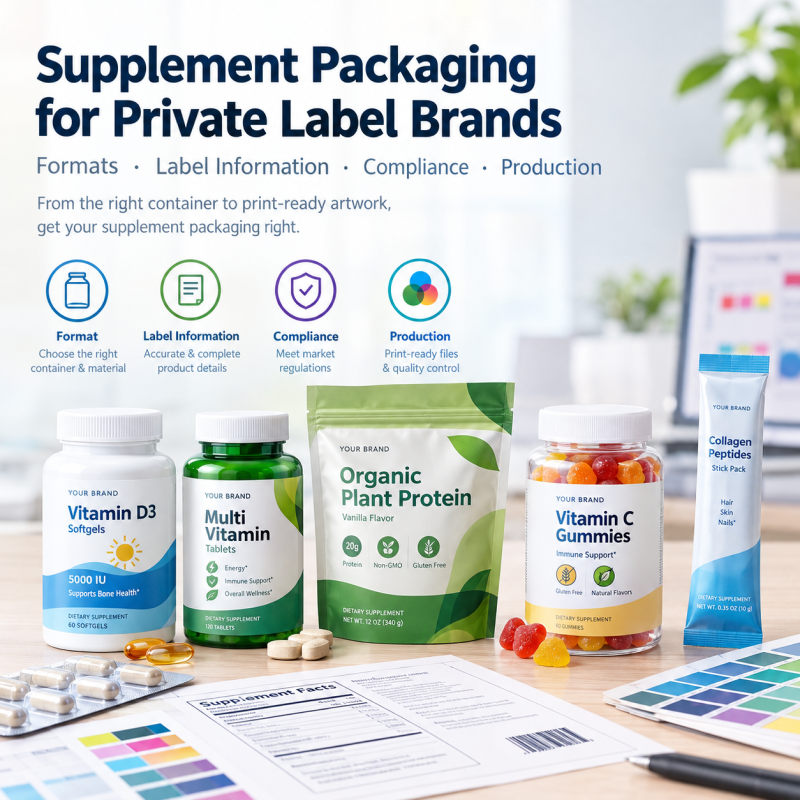
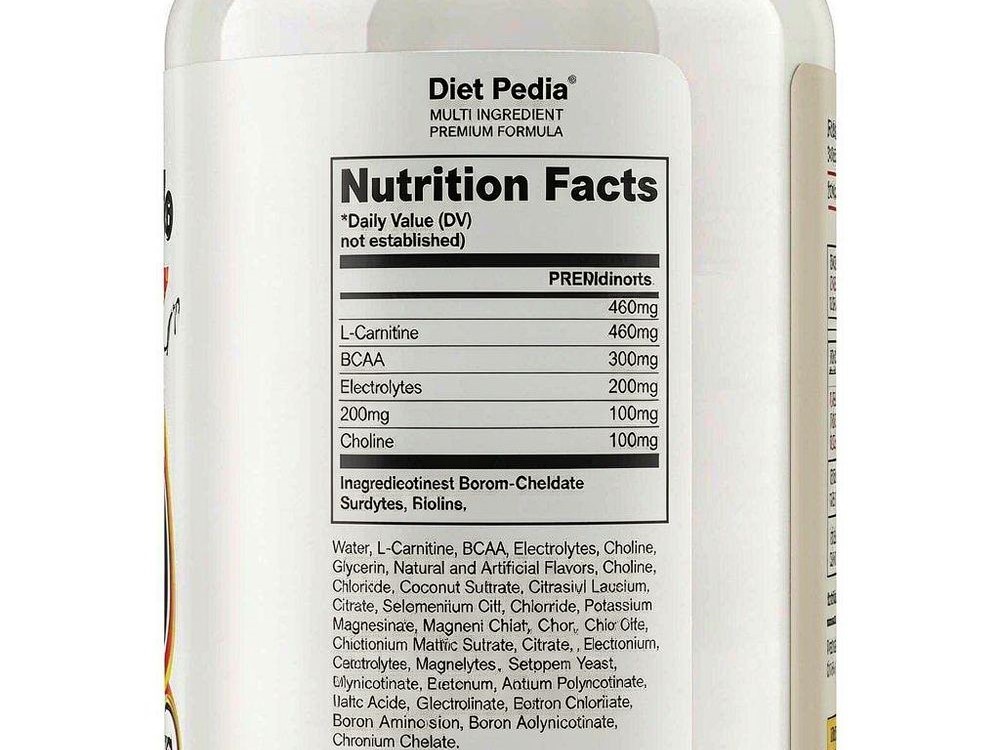
Supplement packaging is more than a visual design. It has to fit the product and container, carry accurate label information, meet the labelling rules of each market you sell into, and translate into a print-ready file that production can actually run. For a private label brand, the packaging decision sits at the intersection of four things: the dosage form, the target market, the sales channel, and the label information that must appear on the panel. If you are starting a packaging project, the first three things to confirm are: which container and format you will use, what information must appear on the label for each target market, and who is responsible for preparing and approving the artwork. Answering these early prevents most of the rework packaging projects run into. There is no single packaging format that suits every supplement. The right choice follows the dosage form, the product's sensitivity to moisture, oxygen and light, the target market, the sales channel, and the brand's positioning. For moisture- and light-sensitive formulas, the material and closure should be assessed against the specific product — do not assume one barrier level fits every formula. Before design starts, gather the information that must appear on the label. This is a product-information task, separate from layout and separate from the regulatory review that comes later. Have these ready before briefing a designer: Keep these three stages separate: Label requirements are not universal. They depend on the target market, the product category, and the specific product. Treat the points below as areas to verify, not as a single checklist that works everywhere. United States. A dietary supplement label in the US must carry a "Supplement Facts" panel listing the names and quantities of the dietary ingredients, the serving size, and the servings per container (with limited exceptions). This is set out in 21 CFR 101.36, and the FDA's Dietary Supplement Labeling Guide walks through the requirements [1] [3]. Ingredients are listed in descending order of predominance by weight, with the list placed immediately below the nutrition label when present [2]. European Union. Food supplements in the EU fall under Directive 2002/46/EC, which sets specific labelling requirements, including the categories of nutrients characterising the product, the recommended daily portion, and warnings not to exceed the stated daily dose and that the product should not be used as a substitute for a varied diet [4]. The general food-labelling rules in Regulation (EU) No 1169/2011 add further particulars, such as the list of ingredients, allergen information, net quantity, and a nutrition declaration [5]. A few points to distinguish carefully: If you are not certain about a specific requirement, confirm it against the applicable regulator's guidance or a qualified regulatory advisor before committing to print. A packaging project moves through a sequence of steps. A typical order looks like this: For print files, common technical requirements include artwork supplied as Adobe Illustrator (AI) or PDF with all text converted to outlines, CMYK colour mode, a minimum of 300 DPI, bleed and safety margins around the trim, and an EAN/UPC barcode with sufficient quiet zone. Exact specifications depend on the printer and packaging type, so confirm them before finalising artwork. Proofs and print samples are where sizing, colour, barcode readability and layout errors get caught before full production. Treat proof approval as a gated step: do not release for production until the proof is checked against the approved information and the market requirements. Several mistakes repeat across packaging projects, and most lead to rework, extra cost, or delay: These problems tend to surface late, when they are most expensive to fix. A simple control — one approved, versioned artwork file shared by all parties, with the label information frozen before design starts — removes most of them. From a buyer's perspective, the practical questions to confirm before committing are: which packaging options the manufacturer offers, how design files are handed over, who is responsible for the accuracy of the label information, how proofs are confirmed, and what review happens before full production. A manufacturer with an integrated packaging process can remove several handoffs. FORNUTRA supports private label and OEM/ODM supplement projects with packaging design and label support, including material sourcing, label printing, and pre-print checks such as print-colour accuracy, regulatory label review, barcode verification and container-fit testing. Packaging formats include bottles (HDPE, PET and glass), jars, stand-up pouches, stick packs, blister packs, sachets and tins, with the associated caps and seals. The label information itself — the Supplement Facts panel data, ingredient list, and any required warnings or allergen statements — is the responsibility of the brand or its regulatory advisor. FORNUTRA can provide formatting guidance, but the mandatory content must come from verified product data. Agreeing on this division of responsibility at the start of the project avoids late surprises. For brands evaluating the broader private label route, FORNUTRA's private label supplement manufacturing covers the formats, minimum order quantities by dosage form, and the steps from product selection through sample approval and production. If you are still weighing private label against custom formulation, the earlier guide Private Label Custom Supplement Manufacturers: OEM vs ODM Options compares the models in detail. Start from the dosage form, the product's sensitivity to moisture and light, the target market, the sales channel, and the required storage. Match the format — bottle, pouch, stick pack, blister, jar or tin — to those factors rather than choosing on appearance alone. The product name and dosage form, ingredient list, serving size and suggested use, container size, target market, and brand assets and barcode details. The mandatory content must come from verified product data. Yes. Label requirements differ by market — for example, the US Supplement Facts panel under 21 CFR 101.36 [3] versus the EU's food-supplement labelling under Directive 2002/46/EC [4]. Confirm the rules for each market you sell into. Yes. Proof or print-sample approval should be a gated step, with the artwork checked against the approved product information and the target market's requirements before full production. Many manufacturers can support packaging and label work, including technical artwork specifications, material sourcing and pre-print checks. Confirm the exact services, and be clear on who owns the accuracy of the label information. If you are preparing a packaging project for a private label supplement, the fastest way to de-risk it is to confirm the format, the label information and the approval path before design begins. To discuss packaging options, label support and production for your product, contact FORNUTRA with your dosage form, target market and packaging requirements.
How to Choose the Right Supplement Packaging
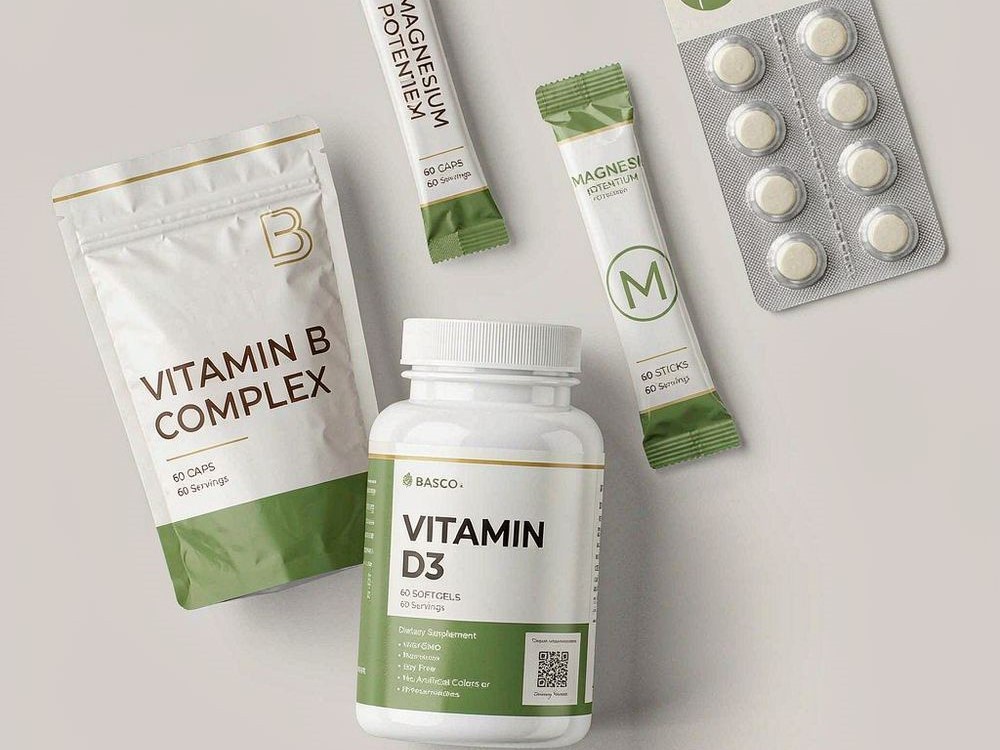
Packaging format Commonly used for Things to confirm Bottles (HDPE / PET / glass) Capsules, tablets, softgels, gummies, powders Size, material, cap and seal type, desiccant or cotton need, label area Stand-up pouches / sachets Powders, gummies, single-serve products Barrier layer, resealability, fill weight, print area Stick packs Single-serve powders Fill range, barrier film, seal integrity Blister packs (Alu-PVC / Alu-Alu) Tablets, capsules, softgels Barrier level needed, cavity size, backing material Jars and tins Gummies, powders, premium lines Material, lid seal, label or direct print What to Prepare for Supplement Label Design
Supplement Packaging Compliance: What Brands Need to Check
From Artwork Approval to Packaging Production
Common Supplement Packaging Mistakes to Avoid
Working with a Supplement Manufacturer on Packaging
Frequently Asked Questions
How do I choose packaging for a private label supplement?
What information is needed for supplement label design?
Does supplement packaging need to meet different requirements in different markets?
Should supplement labels be approved before printing?
Can a supplement manufacturer help with packaging design?
References