The Complete Guide to Nutraceutical Gummy Manufacturing
- Share
- publisher
- FORNUTRA
- Issue Time
- Jul 20,2026
Summary
Learn how nutraceutical gummies are manufactured, from formulation and production to quality control, equipment, and OEM services. Discover how to choose a reliable nutraceutical gummy manufacturer.
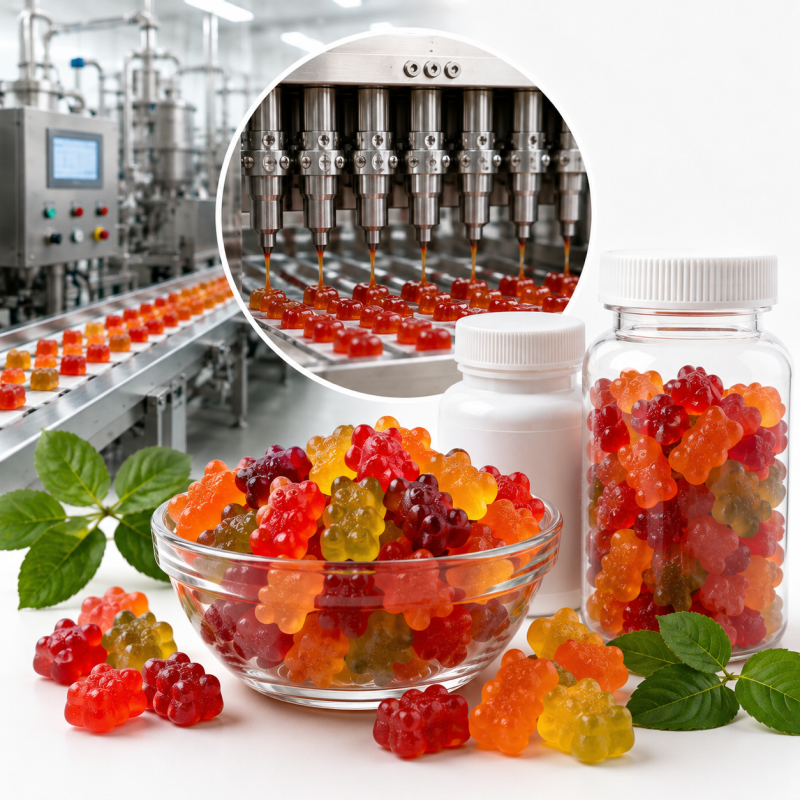
Why Nutraceutical Gummy Products Dominate the Supplement Market
The global nutraceutical gummy market has experienced explosive growth over the past five years. According to industry reports, the gummy supplement segment is projected to expand from $24.6 billion in 2023 to over $48.5 billion by 2028, representing a compound annual growth rate of approximately 14.5%. This surge is not accidental—it reflects a fundamental shift in consumer preferences toward more convenient, enjoyable, and accessible supplement formats.
Gummy supplements have successfully bridged the gap between health-conscious consumption and sensory appeal. Unlike traditional capsules or tablets, gummies offer a palatable experience that encourages daily compliance. For brands seeking to capture market share, partnering with a reliable nutraceutical gummy manufacturer has become a strategic imperative rather than an operational afterthought.

Consumer Preference Data: Why Gummy Supplement Manufacturers Are in High Demand
Consumer research consistently demonstrates that taste and ease of consumption are the top two drivers of supplement adherence. Approximately 67% of adults aged 18 to 34 now prefer gummy formats over traditional pills. This demographic shift has profound implications for brands—and for the nutraceutical gummy manufacturer partners they choose.
Several data points underscore the sustained demand trajectory:
- Adult market dominance: Adults now account for a larger share of gummy supplement consumption than children, driven by categories such as beauty-from-within, sleep support, and immune health.
- Repeat purchase rates: Gummy supplements consistently outperform capsules and tablets in consumer repurchase behavior, with some brands reporting over 80% repeat rates.
- Category expansion: Beyond multivitamins, gummy formats now encompass probiotics, omega-3s, collagen, melatonin, apple cider vinegar, and functional mushrooms—creating diverse manufacturing requirements that only experienced nutraceutical gummy manufacturer partners can fulfill.
- E-commerce acceleration: The visual and shareable nature of gummy products makes them particularly effective in digital retail environments, driving demand for consistent, high-quality manufacturing at scale.
Gummy Supplement Manufacturing Process: Step by Step
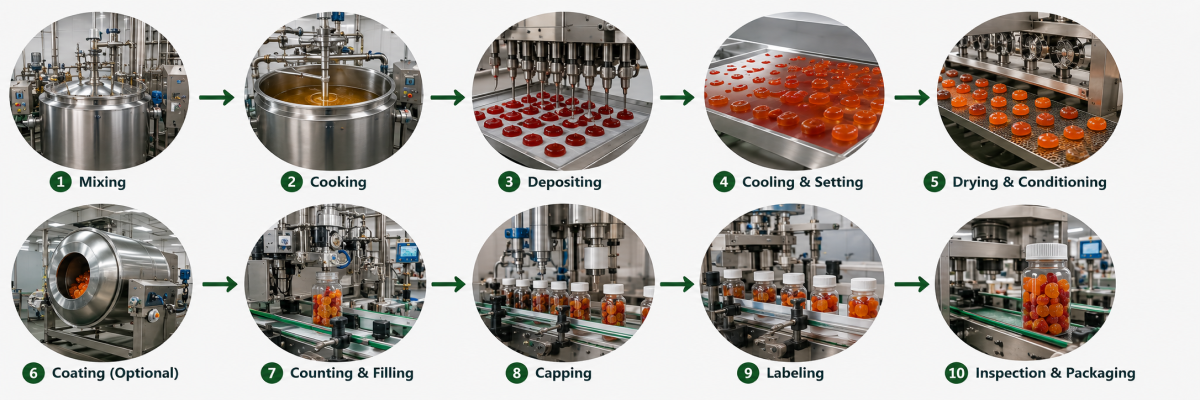
Understanding the manufacturing process is essential for any brand evaluating a nutraceutical gummy manufacturer. The process is more complex than it appears—each stage requires precise control to ensure consistent active ingredient distribution, optimal texture, and extended shelf stability.
Gelatin-Based vs Pectin-Based Gummy Production
The choice of gelling agent fundamentally shapes the manufacturing process and the final product characteristics. A capable nutraceutical gummy manufacturer should offer expertise in both systems.
Gelatin-Based Gummies
- Animal-derived protein from bovine or porcine sources
- Classic chewy, elastic texture preferred by many consumers
- Requires precise temperature control during processing (typically 65–75°C)
- Longer setting time; requires starch mogul molding systems
- Lower raw material cost but narrower consumer appeal
- May not meet vegetarian, vegan, halal, or kosher requirements
Pectin-Based Gummies
- Plant-derived from citrus peels or apple pomace
- Firm yet tender bite with clean flavor release
- Requires higher processing temperatures (typically 100–110°C) and precise pH and Brix control
- Compatible with starchless depositing systems for faster production
- Higher raw material cost but broader market suitability
- Naturally suited for vegan, halal, and kosher certifications
Pectin-based systems have gained significant traction as the preferred choice for modern nutraceutical gummy manufacturer operations, driven by rising demand for plant-based products. However, gelatin remains relevant for specific applications where cost sensitivity and traditional texture preferences dominate.
Mixing → Molding → Drying → Packaging: The Full Production Line
A complete gummy production line consists of four integrated stages, each demanding specialized equipment and process expertise from your nutraceutical gummy manufacturer:
Mixing & Cooking
Active ingredients, sweeteners, gelling agents, flavors, and colors are precisely weighed and combined in jacketed mixing tanks. Temperature, pH, and Brix levels are continuously monitored. For heat-sensitive nutraceuticals such as probiotics or certain vitamins, the manufacturer must employ strategies like post-cooking addition or microencapsulation to preserve potency.
Molding & Depositing
The cooked slurry is transferred to a depositor that precisely dispenses the mixture into molds. Starch mogul systems (for gelatin) or starchless depositing systems (for pectin) shape the gummies. Deposit accuracy directly affects active ingredient uniformity—a critical quality parameter for any reputable nutraceutical gummy manufacturer.
Drying & Conditioning
Molded gummies pass through controlled drying tunnels where temperature, humidity, and airflow are carefully regulated. This stage determines final moisture content, texture, and shelf stability. Insufficient drying leads to sticky products and microbial risk; over-drying produces hard, unpalatable gummies.
Coating & Packaging
Demolded gummies may receive a light oil or wax coating to prevent sticking. They are then weighed, counted, and filled into bottles, pouches, or blister packs. Automated packaging lines with integrated checkweighers and metal detectors ensure product integrity through the final stage.
Key Equipment for a Gummy Supplement Manufacturer
The equipment infrastructure of a nutraceutical gummy manufacturer directly determines production capacity, product consistency, and the range of formulations that can be produced. Brands evaluating manufacturing partners should understand the key equipment categories and their implications.
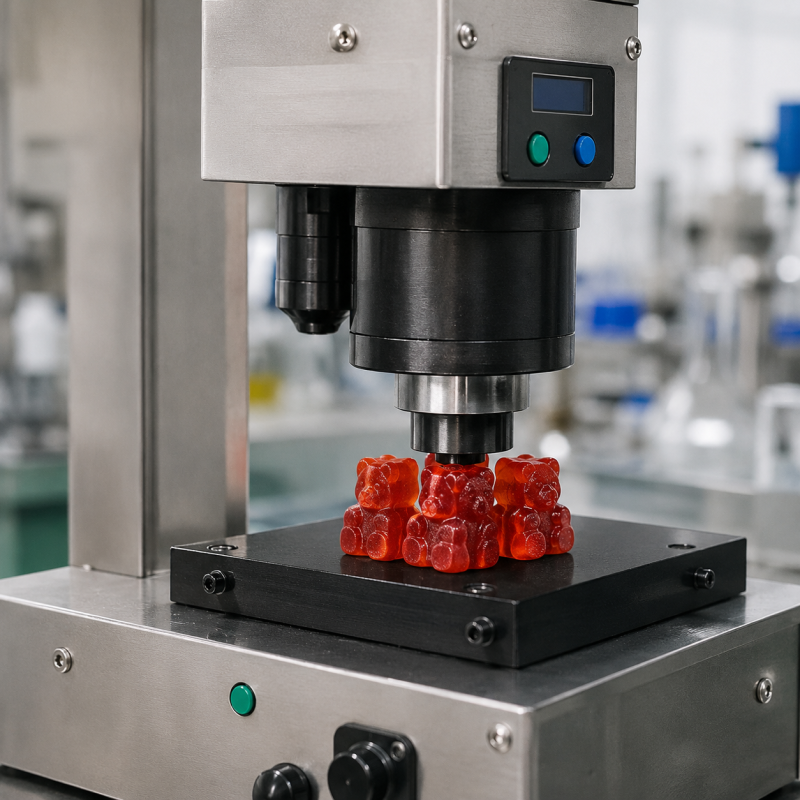
Automated Gummy Manufacturing Line Configuration and Investment
A fully automated gummy production line represents a significant capital investment—typically ranging from $500,000 to over $3 million depending on capacity and automation level. Key equipment components include:
- Mixing and cooking systems: Jacketed kettles with precise temperature control and vacuum capabilities for degassing. Multi-vessel configurations enable continuous production rather than batch processing.
- Depositing machines: High-speed servo-driven depositors capable of handling multiple colors, flavors, and layers in a single pass. Multi-head configurations enable center-filled and layered gummy production.
- Molding systems: Starch mogul lines for gelatin-based production or starchless depositing systems for pectin-based gummies. Starchless systems offer faster changeovers and reduced contamination risk.
- Drying tunnels: Multi-zone controlled-environment tunnels with independent temperature, humidity, and airflow regulation per zone. Advanced systems include real-time moisture monitoring.
- Coating and polishing equipment: Automated coating pans for oil, wax, or sugar coating application with precise dosing control.
- Packaging lines: Integrated systems combining counting, weighing, filling, capping, labeling, and cartoning. Vision inspection systems verify fill levels, cap placement, and label accuracy.
When evaluating a nutraceutical gummy manufacturer, inquire about equipment age, automation level, and whether the facility uses starchless technology—which generally indicates newer, more hygienic production capabilities.
Quality Control Standards for Gummy Supplement Manufacturing
Quality control distinguishes a professional nutraceutical gummy manufacturer from a commodity producer. The unique challenges of gummy production—active ingredient stability in a high-moisture, high-temperature environment—demand rigorous testing protocols at every stage.
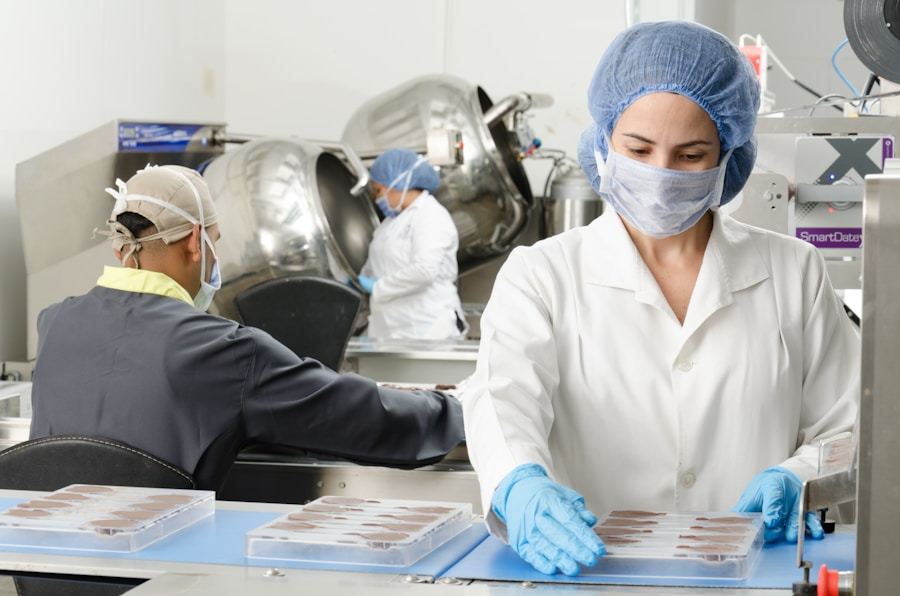
Active Ingredient Uniformity, Texture Testing and Shelf Life
Three interconnected quality dimensions define a superior gummy product:
Active Ingredient Uniformity
Unlike tablets where each unit is individually compressed, gummy active ingredients are dispersed in a liquid matrix that is then deposited into molds. Achieving consistent potency across every gummy requires precise mixing, controlled deposit weights, and homogeneous suspension of ingredients throughout the production run. A competent nutraceutical gummy manufacturer conducts potency testing at multiple points: post-mixing, post-depositing, and on finished product samples, typically targeting ±10% of label claim with relative standard deviation below 5%.
Texture Testing
Texture Profile Analysis (TPA) using instrumental methods quantifies hardness, springiness, cohesiveness, gumminess, and chewiness. These objective measurements correlate with consumer perception and must remain consistent batch to batch. Key parameters influenced by the nutraceutical gummy manufacturer's process control include gel strength (Bloom value), moisture content, and water activity (aw).
Shelf Life and Stability
Gummy supplements typically target 18–24 months of shelf stability. Accelerated stability testing at elevated temperatures and humidity levels predicts long-term behavior. Critical stability indicators include active ingredient degradation, texture changes, color fading, microbial growth, and syneresis (moisture weeping). A reliable nutraceutical gummy manufacturer provides comprehensive stability data and supports reformulation when stability challenges arise.
Additional quality certifications to look for include GMP compliance, NSF certification, ISO 22000, and third-party laboratory verification. These certifications provide independent validation of a nutraceutical gummy manufacturer's quality systems and commitment to continuous improvement.
How to Choose the Right Nutraceutical Gummy Manufacturer
Selecting a manufacturing partner is one of the most consequential decisions a supplement brand will make. The right nutraceutical gummy manufacturer becomes a strategic asset; the wrong one creates operational risk, compliance exposure, and brand reputation damage.
Capacity Evaluation, Customization and Experience
Use the following evaluation framework when assessing potential nutraceutical gummy manufacturer partners:
Production Capacity and Scalability
Verify the manufacturer can meet your current minimum order quantities while demonstrating the ability to scale as your brand grows. Ask about: annual production output in pieces or bottles, number of dedicated gummy production lines, typical lead times for new orders and reorders, surge capacity during peak seasons, and equipment redundancy to mitigate downtime risk.
Customization Capabilities
Beyond standard shapes and flavors, assess the manufacturer's ability to deliver: custom formulations with your specified active ingredients and dosages, proprietary shapes and multi-color designs, sugar-free and functional formulations, specialized coatings and textures, and packaging solutions aligned with your brand positioning. A versatile nutraceutical gummy manufacturer should offer both stock formulations for rapid market entry and full custom development for brand differentiation.
Regulatory Expertise and Certifications
Confirm that the manufacturer holds relevant certifications (GMP, FDA registration, ISO) and has experience navigating regulatory requirements in your target markets. A nutraceutical gummy manufacturer serving global brands should demonstrate familiarity with FDA 21 CFR Part 111, EU directives, Health Canada NHP regulations, and other relevant frameworks. Ask about their track record with regulatory inspections and any history of warning letters or enforcement actions.
R&D Support and Formulation Expertise
The best manufacturing partnerships go beyond production. Evaluate the manufacturer's in-house R&D capabilities: number of formulation scientists, experience with challenging active ingredients, speed of prototype development, availability of stability testing services, and willingness to collaborate on innovation. A nutraceutical gummy manufacturer with strong R&D capabilities can help you identify market opportunities and translate them into viable products faster than competitors.
Communication and Transparency
During evaluation, assess responsiveness, willingness to share process details, clarity of pricing structures, and the quality of documentation provided. These early interactions are strong indicators of what the ongoing partnership experience will be like.

FORNUTRA's OEM Gummy Manufacturing Services and Advantages
FORNUTRA's gummy manufacturing division combines 17 years of nutraceutical formulation expertise with purpose-built gummy production infrastructure. With 6,000+ proven formulas, three dedicated R&D centers, and 30,000 m² of GMP-certified manufacturing space across dual production sites, FORNUTRA serves as a comprehensive nutraceutical gummy manufacturer partner for over 5,000 global health brands.
Key differentiators of FORNUTRA's gummy manufacturing services include:
- Dual-platform capability: Both gelatin-based and pectin-based (vegan) gummy production lines, enabling formulation flexibility across all market segments.
- Science-backed formulation: Access to 6,000+ proven supplement formulas developed over 17 years, with custom co-creation services for proprietary blends.
- Flexible MOQs: Production quantities suitable for Amazon sellers, emerging brands, and enterprise-scale operations, with seamless scale-up pathways.
- End-to-end service: From custom formulation and R&D through private label packaging, regulatory documentation, and logistics support.
- Global compliance: Strict adherence to FDA, EFSA, and GMP standards with comprehensive batch documentation and 90% ingredient traceability.
- Quality infrastructure: In-house laboratories conducting identity, potency, microbial, and heavy metal testing throughout the production cycle.
Explore FORNUTRA's complete product manufacturing capabilities and learn how our gummy production expertise can accelerate your brand's market entry.
Get a Quote for Your Gummy Supplement Manufacturing Project
Whether you are launching a new gummy supplement brand, expanding an existing product line into gummy formats, or seeking a more reliable nutraceutical gummy manufacturer partner, FORNUTRA's team is ready to support your project from concept to commercialization.
Our consultative approach begins with understanding your product vision, target market, and technical requirements. We then provide a tailored proposal covering formulation options, production timelines, quality specifications, and competitive pricing—typically within 2–3 business days.
Take the first step toward bringing your gummy supplement product to market. Contact FORNUTRA today to discuss your project requirements, or submit an inquiry with your specifications for a prompt, detailed quotation. You may also learn more about our manufacturing capabilities and certifications before reaching out.