The Tablet Supplement Manufacturing Process: From Blending to Coating and Quality Control
- Share
- publisher
- FORNUTRA
- Issue Time
- Jul 10,2026
Summary
Tablet supplement manufacturing involves precision blending, granulation, compression, and coating. Explore every key stage from formulation to quality control and packaging.
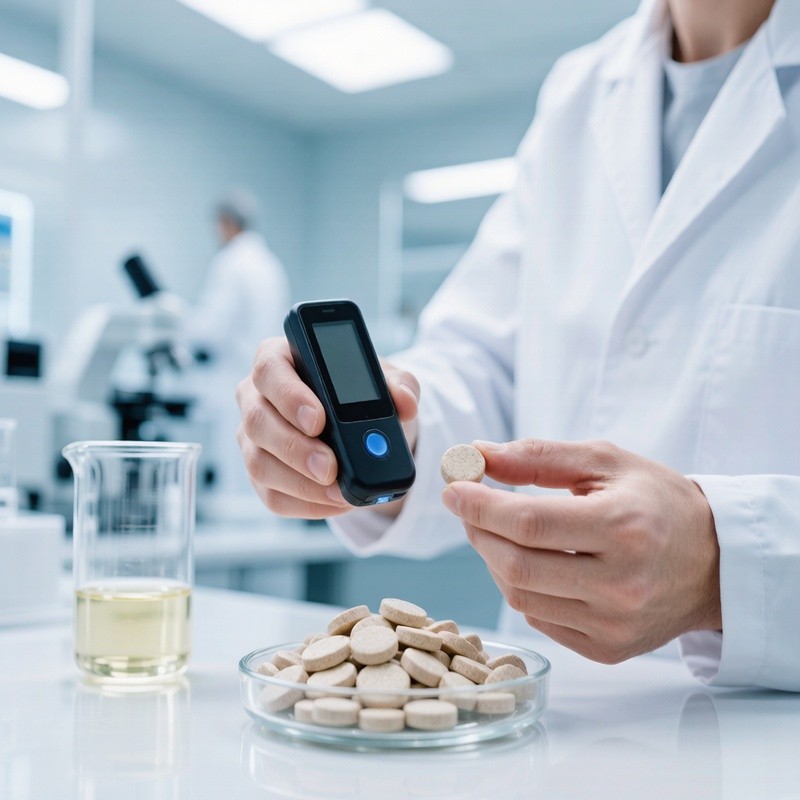
The manufacturing of tablet dietary supplements is a precise, multi-stage process that transforms raw nutritional ingredients into a stable, effective, and consistent finished product. From the initial formulation and raw material preparation through blending, compression, coating, and quality control, each step must be carefully controlled to ensure that every tablet meets exacting standards for potency, purity, and physical integrity. This article provides a detailed walkthrough of the tablet supplement manufacturing process, offering brands and industry professionals a clear understanding of what happens behind the scenes.
Step 1: Formulation Development and Raw Material Preparation
Before any tablet is produced, the formulation must be developed and optimized. This critical phase determines the overall quality, stability, and performance of the finished product. Formulation scientists select the active ingredients and functional excipients, determine their proportions, and evaluate how they interact with each other. The goal is to create a blend that compresses reliably, disintegrates properly, and delivers the intended dose of active ingredients consistently.
Once the formulation is finalized, raw materials are received, inspected, and prepared for production. Each incoming batch of raw material undergoes rigorous quality control testing to verify identity, potency, purity, and microbiological safety. Materials that pass testing are released to production, while any that fail are quarantined and rejected. Raw materials are then accurately weighed according to the formulation sheet, a process that requires precision balances and careful documentation to ensure dose accuracy.
Critical checkpoint: Raw material testing is the foundation of product quality. Identity testing confirms that each ingredient is exactly what it claims to be, while potency testing ensures the active content meets specifications. Skipping or rushing this step can compromise the entire production batch.
Step 2: Blending and Granulation
The weighed raw materials must be thoroughly blended to achieve a uniform mixture. The blending method depends on the physical properties of the ingredients and the requirements of the tablet press. Two primary approaches are used: direct compression and granulation.
Direct Compression Blending
In direct compression, the active ingredients and excipients are simply blended together in a large-scale mixer, such as a V-blender or a bin blender, for a predetermined period. This method is preferred when the ingredients have good flow and compressibility properties, as it eliminates additional processing steps, reducing time and cost. However, not all formulations are suitable for direct compression, particularly those with low-dose active ingredients that require enhanced uniformity or those containing ingredients with poor flow characteristics.
Granulation for Improved Flow and Uniformity
When direct compression is not feasible, granulation is used to improve the flow, compressibility, and content uniformity of the powder blend. Granulation agglomerates fine powder particles into larger, more uniform granules. Two methods are commonly employed.
Wet Granulation
A granulating liquid, typically a binder solution, is added to the powder blend while mixing. The resulting wet mass is forced through a screen to form granules, which are then dried in a fluid bed dryer or tray dryer. After drying, the granules are milled to a uniform size. Wet granulation produces dense, uniform granules with excellent compressibility but involves more processing steps and equipment.
Dry Granulation
Dry granulation compacts the powder blend between two rollers under high pressure to form a solid sheet, which is then milled into granules. This method is used for ingredients that are sensitive to heat or moisture and cannot undergo wet granulation. It is faster and requires fewer steps but may produce less uniform granules.
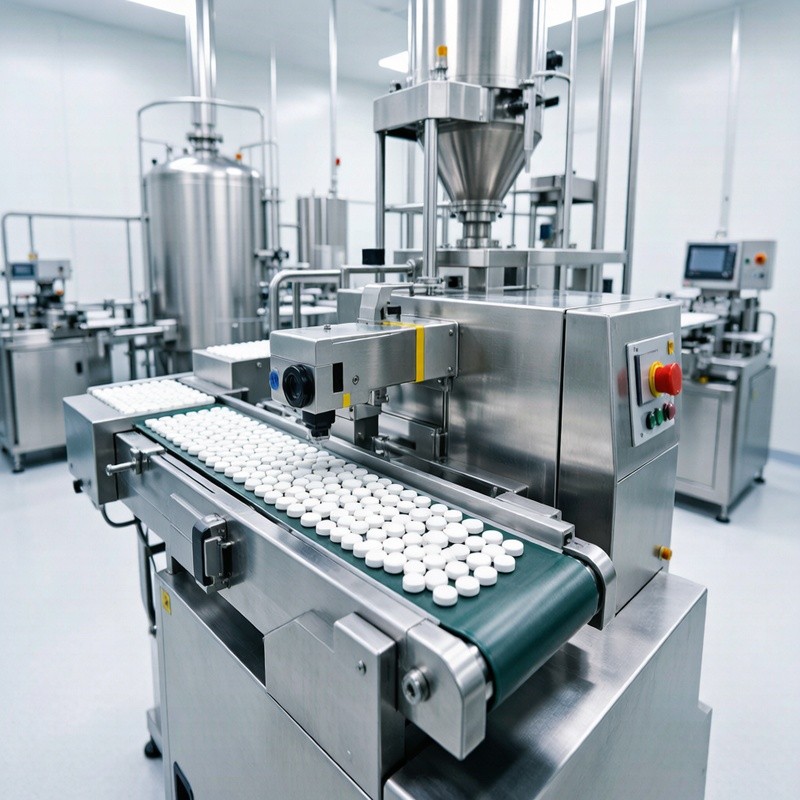
After granulation, the final blend is prepared by adding the remaining excipients, such as the external disintegrant and lubricant, in a final blending step. This blend is then ready for compression.
Step 3: Compression and Tabletting
Compression is the core of tablet manufacturing, where the powder blend is transformed into solid tablets. This is performed using a tablet press machine, which can be a single-punch press for small-scale or development batches, or a high-speed rotary press for commercial production.
A rotary tablet press operates with a rotating turret that holds multiple sets of punches and dies. As the turret rotates, the punches pass through a series of cam tracks that control their vertical movement. The process unfolds in several stages. First, the lower punch descends in the die, creating a cavity that is filled with powder from the feed frame. A scraper blade removes excess powder, ensuring a consistent fill volume. Then, the upper punch descends into the die, and both punches compress the powder between them under high pressure, forming the tablet. Finally, the upper punch withdraws, the lower punch rises, and the finished tablet is ejected from the die.
Key parameters: Compression force, dwell time (the duration the powder is under maximum pressure), and fill depth are the primary variables that determine tablet hardness, thickness, weight, and disintegration time. These parameters must be optimized for each formulation and monitored continuously during production.
During compression, in-process quality checks are performed at regular intervals. Operators verify tablet weight, hardness, thickness, and disintegration time to ensure the tablets meet specifications. Any deviations trigger immediate adjustments to the press settings to maintain quality.
Step 4: Tablet Coating
While not all tablets require coating, it is a common step that enhances product quality and consumer experience. Coating is performed in a coating pan, where tablets are tumbled in a rotating drum while a coating solution is sprayed onto their surfaces. Simultaneously, warm air is drawn through the pan to evaporate the solvent, leaving a thin, uniform film on each tablet.
Types of Coating
- Film coating: A thin polymer-based layer that improves appearance, facilitates swallowing, masks taste, and protects ingredients from light and moisture. This is the most common coating type for dietary supplement tablets.
- Enteric coating: A specialized polymer coating that resists dissolution in stomach acid and dissolves only in the higher pH of the small intestine, protecting acid-sensitive ingredients and preventing gastric irritation.
- Sugar coating: A traditional method that applies successive layers of sugar solution to create a smooth, glossy finish with excellent taste masking, though it is less common in modern supplement production.
Coating quality depends on precise control of several variables, including spray rate, pan speed, inlet air temperature, airflow, and coating solution concentration. Improper control can result in defects such as orange-peel texture, cracking, sticking, or uneven coverage.
Step 5: Quality Control and Testing
Quality control is not a single step but an ongoing process that spans the entire manufacturing cycle. However, comprehensive testing of the finished tablets is a critical milestone before the product can be released to market. Finished product testing evaluates multiple quality attributes to ensure the tablets meet all specifications.
Weight Variation
Individual tablets are weighed to confirm uniformity. Weight variation must fall within acceptable limits, typically plus or minus 5 percent of the target weight, to ensure dose consistency.
Hardness and Friability
Hardness testing measures the force required to break a tablet, ensuring it is strong enough to withstand handling but will disintegrate properly. Friability testing tumbles tablets to assess resistance to chipping and abrasion.
Disintegration Time
Tablets are tested in a disintegration apparatus to confirm they break apart within the specified time frame, ensuring timely release of active ingredients in the body.
Potency and Purity
Analytical methods such as HPLC verify that the active ingredient content matches the label claim. Tests for heavy metals, microbes, and contaminants ensure product safety.
Dissolution Testing
For certain products, dissolution testing measures the rate at which active ingredients are released from the tablet in a controlled fluid environment, providing insight into bioavailability.
Visual Inspection
Tablets are inspected for visual defects such as capping, lamination, picking, sticking, color variation, and surface imperfections that could indicate formulation or process issues.
Quality commitment: Reputable manufacturers operate under cGMP guidelines and maintain full batch documentation, including certificates of analysis for every production run. This traceability ensures that any quality issue can be investigated and resolved. Learn about our quality systems or request a quality documentation package.
Step 6: Packaging and Labeling
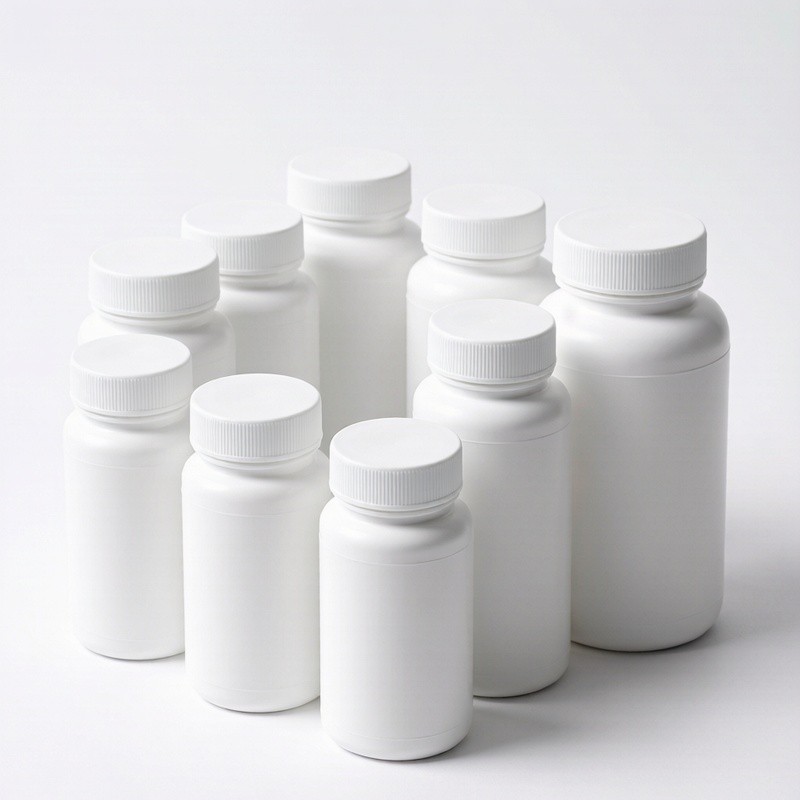
The final step in the manufacturing process is packaging, which protects the tablets from environmental factors and provides essential information to consumers. Common packaging formats include HDPE bottles with tamper-evident seals, blister packs for unit-dose convenience, and pouches for bulk products. Packaging materials are selected based on the product's stability requirements, with desiccants often included to control moisture.
Labeling must comply with regulatory requirements, including ingredient lists, supplement facts panels, dosage instructions, allergen declarations, and lot numbers with expiration dates. Proper packaging and labeling complete the transformation from raw materials to a finished, market-ready supplement product.
Frequently Asked Questions
How long does the tablet manufacturing process take?
The timeline varies depending on the complexity of the formulation, batch size, and coating requirements. A standard production run from raw material preparation to finished packaging typically takes several days to a few weeks, with quality control testing adding additional time before product release.
What is the difference between wet granulation and dry granulation?
Wet granulation uses a liquid binder to form granules and produces dense, uniform granules with excellent compressibility, but involves drying steps. Dry granulation compacts powder mechanically without liquids, making it suitable for moisture-sensitive ingredients, but may produce less uniform granules.
Why is quality control testing so important in tablet manufacturing?
Quality control testing ensures that every batch of tablets meets specifications for potency, purity, uniformity, and physical properties. It protects consumer safety, ensures product efficacy, and maintains regulatory compliance. Without rigorous QC, there is no guarantee that the product delivers what the label claims.
What is cGMP and why does it matter?
cGMP stands for Current Good Manufacturing Practice, a set of regulations enforced by regulatory agencies such as the FDA. cGMP certification requires manufacturers to follow stringent protocols for facility design, equipment maintenance, personnel training, documentation, and quality control. It is the benchmark for quality in dietary supplement manufacturing.
Conclusion
The tablet supplement manufacturing process is a sophisticated, multi-stage operation that demands precision, expertise, and rigorous quality control at every step. From the careful selection and testing of raw materials through blending, granulation, compression, coating, and final quality assurance, each phase plays a vital role in producing tablets that are safe, effective, and consistent. For brands seeking a manufacturing partner, understanding this process provides valuable insight into what separates a high-quality tablet supplement from an inferior one. By partnering with a cGMP-certified manufacturer that invests in advanced equipment, skilled personnel, and comprehensive quality systems, brands can confidently bring tablet supplements to market that meet the highest standards of quality and consumer trust.
Ready to start your tablet supplement project? Contact our manufacturing team or explore our product capabilities to learn more.