White Label vs Private Label Supplement Manufacturing: Which Model Is Right for Your Brand?
- Share
- publisher
- FORNUTRA
- Issue Time
- Sep 4,2026
Summary
Compare white label and private label supplement manufacturing to understand costs, MOQ, timelines, customization, and brand control, and find the right manufacturing model for your business strategy.
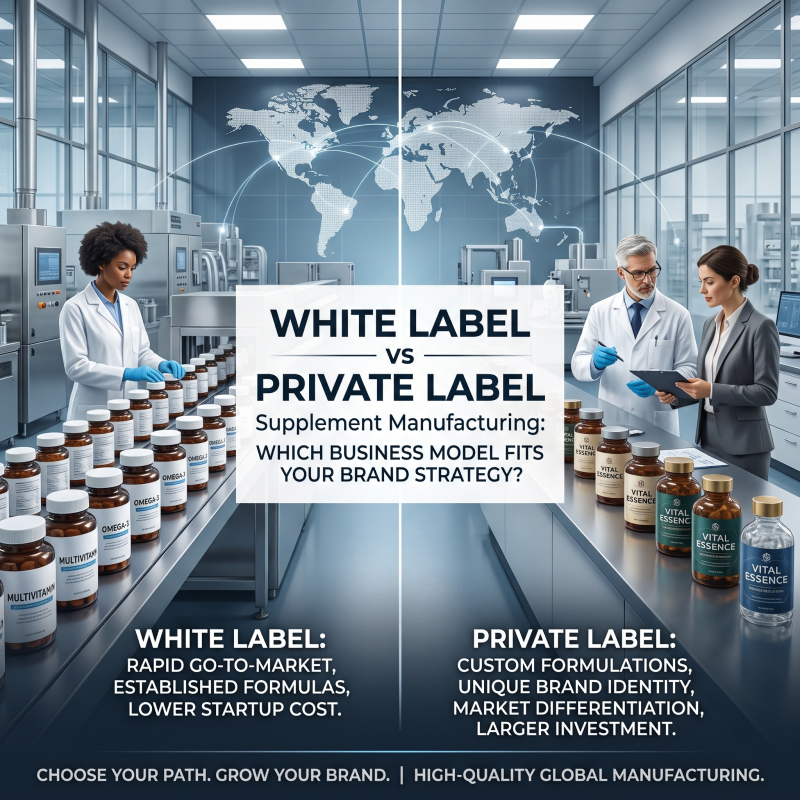
Launching a supplement brand does not always require developing a formula from scratch. For many businesses, white label and private label supplement manufacturing provide two practical ways to bring products to market while controlling investment, timelines, and brand positioning.
But which model is right for your business? The answer depends on how much customization you need, your target launch timeline, expected order volume, and your long-term brand strategy.
White Label Supplement Manufacturing Explained
White label supplement manufacturing allows brands to select ready-made supplement formulas developed by a manufacturer and sell them under their own brand. The manufacturer handles production, while the brand focuses on packaging, marketing, sales, and distribution.
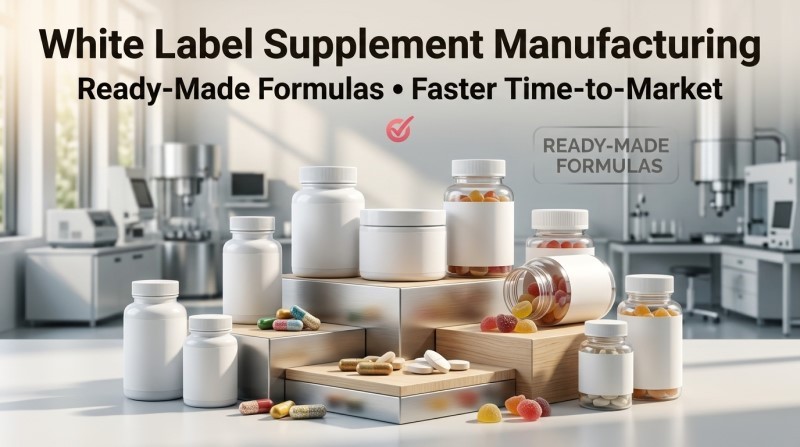
Ready-Made Formulas, Faster Time-to-Market and Lower Investment
The main advantage of white label products is speed. Instead of spending months developing and testing a new formula, brands can select an existing formula that fits their target market and move more quickly toward production.
White label manufacturing can also reduce initial development costs and simplify product planning. Depending on the manufacturer and product category, businesses may have access to ready-made formulas in capsules, tablets, gummies, powders, liquids, and other popular dosage forms.
For startups and businesses testing a new product category, working with a low MOQ supplement manufacturer can further reduce the upfront inventory commitment.
Which Brands Benefit from White Label Supplement Manufacturing?
White label is often suitable for:
· Startups launching their first supplement products
· E-commerce and DTC brands testing market demand
· Retailers and distributors adding new products
· Businesses that prioritize faster time-to-market
· Brands looking for lower initial development costs
· Companies that want to test several product concepts before investing in custom formulas
If speed and flexibility are more important than developing a highly exclusive formula, white label can be an efficient starting point.
Private Label Supplement Manufacturing: Full Brand Control
Private label supplement manufacturing offers a higher level of customization. Instead of selecting an existing formula, brands can work with a manufacturer to develop or modify a formula according to specific product requirements.
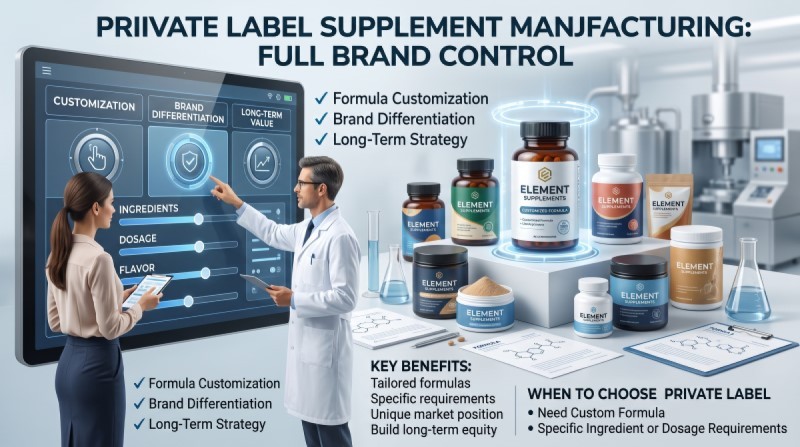
Customization, Brand Differentiation and Long-Term Value
Private label gives brands greater control over ingredients, dosage levels, flavor profiles, product positioning, and other formula characteristics.
This approach can be valuable when a brand has already identified a specific market opportunity and wants a product that is more differentiated from competing supplements.
Although private label generally requires more development time and investment than white label, a customized product can support a stronger long-term product strategy and brand identity.
When to Choose Private Label Over White Label
Private label may be the better option when your brand:
-
-
· Needs a customized formula
-
· Has specific ingredient or dosage requirements
-
· Wants greater product differentiation
-
· Is building a long-term supplement product line
-
· Has an established target market and clear product positioning
-
· Requires more control over the final product specification
For brands with a clear product concept, a reliable supplement contract manufacturer can help turn that concept into a commercially viable product.
White Label vs Private Label: Which Model Fits Your Brand?
The two models serve different business priorities. A quick comparison can help you decide:
| Factor | White Label | Private Label |
|---|---|---|
| Formula | Ready-made | Customized |
| Initial Investment | Lower | Higher |
| MOQ | Often lower | Usually higher |
| Time to Market | Faster | Longer |
| Customization | Limited to available options | High |
| Product Differentiation | Moderate | High |
| Development | Minimal | Formula development required |
| Best For | Startups and market testing | Long-term brand building |
In simple terms, white label prioritizes speed, simplicity, and lower initial investment, while private label prioritizes customization, differentiation, and greater product control.
Neither model is universally better. The right choice depends on your product strategy and current stage of growth.
How to Choose the Best White Label Supplement Manufacturer
Choosing the right manufacturing partner is just as important as choosing the right business model. When comparing a potential best white label supplement manufacturer, consider more than the product catalog.
Formula and Manufacturing Capabilities
Look for a manufacturer with a broad formula portfolio and experience across relevant supplement categories and dosage forms. A capable nutraceutical contract manufacturer should be able to support both ready-made products and customized development when your brand grows.
MOQ, Lead Time and Scalability
MOQ can have a major impact on cash flow, especially for startups. A low minimum supplement manufacturer can make it easier to test demand without committing to excessive inventory.
At the same time, consider whether the manufacturer can scale production as your sales increase. A supplier that supports both smaller initial orders and larger production runs can provide greater flexibility over the long term.
Quality, Compliance and Documentation
Quality systems, raw material control, product testing, documentation, and market-specific compliance should also be part of your evaluation.
Whether you need a dietary supplement contract manufacturer for a new product or a nutraceutical contract manufacturer for an expanding product line, your manufacturing partner should be able to provide the documentation and production support required for your target market.
FORNUTRA's White Label and Private Label Manufacturing Solutions
FORNUTRA provides both white label and private label supplement manufacturing solutions for brands at different stages of development.
For businesses that want to launch quickly, white label manufacturing provides access to ready-made formulas and a streamlined path toward production. For brands looking for greater differentiation, private label solutions support customized formula development and product specifications.
With capabilities covering multiple supplement formats and product categories, FORNUTRA can support brands from initial product selection and formulation through testing, manufacturing, packaging, and commercial production.
Whether you are launching your first supplement or expanding an existing product line, the right manufacturing model can help balance investment, speed, customization, and long-term growth.
Get a Free Consultation: White Label or Private Label?
Not sure which model fits your brand?
Tell FORNUTRA about your product concept, preferred dosage form, estimated order quantity, and target market. Our team can help you evaluate whether white label or private label manufacturing is the more suitable approach for your project.
Frequently Asked Questions
1. What is the difference between white label and private label supplements?
White label supplements use ready-made formulas supplied by a manufacturer, allowing brands to launch products faster with lower initial development costs. Private label supplements offer greater customization, including formula, ingredients, dosage, and product specifications. The right option depends on your budget, timeline, customization needs, and long-term brand strategy.
2. Is white label supplement manufacturing suitable for startups?
Yes. White label manufacturing can be a practical option for startups because it reduces formula development requirements and can shorten the time to market. Working with a low MOQ supplement manufacturer can also help new brands test market demand without committing to large initial production volumes.
3. How do I choose the best white label supplement manufacturer?
When choosing the best white label supplement manufacturer, consider its formula selection, manufacturing capabilities, MOQ, lead times, quality control, testing, documentation, and ability to scale production. It is also important to choose a manufacturer that understands the requirements of your target market and product category.
4. Can a supplement contract manufacturer provide both white label and private label services?
Yes. Many experienced supplement contract manufacturers provide both ready-made white label formulas and customized private label development. This allows brands to start with a faster-to-market product and move toward customized formulas as their business grows and product requirements become more specific.
5. Can I work with a low MOQ supplement manufacturer for private label products?
MOQ depends on the product type, formula, ingredients, packaging, and production requirements. Some manufacturers offer more flexible minimum order options for selected products. Discussing your estimated order quantity with a low MOQ supplement manufacturer can help determine which white label or private label solution is practical for your project.