Vitamin Manufacturing: From Raw Materials to Finished Products — The Complete Process
- Share
- publisher
- FORNUTRA
- Issue Time
- Aug 3,2026
Summary
Discover the complete vitamin manufacturing process, from raw materials to finished products, and explore OEM/ODM solutions with experienced vitamin supplement manufacturers.
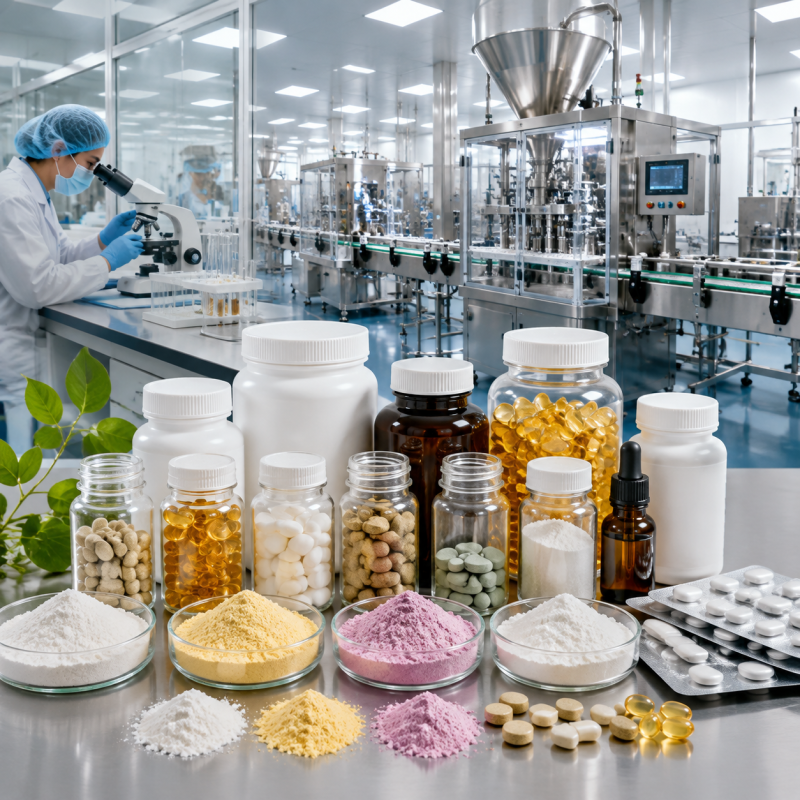
The global dietary supplement industry has entered a phase of sustained expansion, and at its core lies a fundamental question for every brand: who will manufacture your vitamins? Vitamin supplement manufacturing is a controlled, multi-stage process that moves from raw material selection through formulation development, production, and quality testing to finished-product inspection. Whether you are launching a new line of multivitamin tablets, scaling an existing supplement brand, or sourcing a reliable vitamin supplement manufacturer for a specific formulation, understanding the end-to-end production process is essential. This guide walks through every stage of vitamin manufacturing — from raw material procurement to finished packaged products — and explains what to look for in professional vitamin supplement manufacturers. The global vitamins market continues to expand, driven by rising health consciousness, aging populations, and increased demand for preventive nutrition. Industry analysts project consistent year-over-year growth across all major vitamin categories, with particularly strong momentum in Asia-Pacific and North American markets. Each vitamin category serves distinct consumer needs, and understanding demand patterns helps brands align product development with market opportunities: With such diverse consumer demand, brands must partner with vitamin manufacturers capable of handling multiple active ingredients, managing complex formulations, and maintaining consistent quality across product lines. The right manufacturing partner does more than produce tablets — they help brands navigate formulation challenges, regulatory requirements, and market entry strategies. Vitamin supplement manufacturing involves several controlled stages, from raw material selection and formulation development to production, quality testing, and finished-product release. Professional dietary supplement manufacturers follow a structured production workflow designed to deliver consistent quality at every stage. Here is how the complete process works: Every batch begins with rigorous raw material evaluation. Manufacturers source active vitamin ingredients from qualified suppliers and verify every shipment through Certificate of Analysis (COA) review, identity testing, purity verification, and potency assays. Only materials meeting established specifications proceed to production. Whether the project is OEM (using an existing formula) or ODM (custom formulation development from scratch), the R&D team determines precise ingredient ratios, evaluates ingredient compatibility, optimizes dosage levels, and conducts preliminary stability assessments. This stage defines the product's efficacy profile and manufacturing feasibility. The core production phase involves multiple controlled operations: precision weighing and blending to ensure content uniformity, granulation for improved flow and compressibility, compression or encapsulation depending on dosage form, and in-process quality checks at defined intervals. Temperature, humidity, and equipment parameters are monitored throughout. Finished products are packaged in formats tailored to market requirements — bottles, blister packs, sachets, or custom-designed packaging. Each batch undergoes final quality release testing before shipment. Packaging solutions are selected to protect product stability, support brand identity, and comply with destination-market labeling regulations. Different dosage forms require distinct manufacturing technologies. Professional vitamin supplement manufacturers maintain multi-format production capabilities to serve diverse brand requirements: Tablet supplement manufacturing involves powder blending, wet or dry granulation, and compression using rotary tablet presses. Key process parameters include compression force, tablet hardness, and disintegration time. Optional coating technologies — film coating, sugar coating, or enteric coating — add functional benefits such as taste masking, moisture protection, or delayed release. Capsule supplement manufacturing uses automatic capsule filling machines to dose powder, granule, or pellet blends into two-piece hard shells. A capsule supplement manufacturer typically offers both gelatin and vegetarian (HPMC) capsule options. Key controls include fill weight accuracy, capsule sealing integrity, and disintegration performance. Gummy supplement manufacturing involves a cooking process where gelatin or pectin is combined with sweeteners, flavors, and active vitamin ingredients at controlled temperatures. The mixture is deposited into starch molds, cooled, and demolded. Texture control, moisture management, and active-ingredient stability are critical challenges — vitamins can degrade during the heating phase if not properly protected. Liquid supplement manufacturing covers solutions, suspensions, emulsions, and syrups. The process involves dissolving or dispersing active ingredients in a liquid base, followed by homogenization, preservation system addition, and filling into bottles with droppers or measuring cups. pH control, microbial stability, and ingredient solubility are key quality parameters. Production Capability Comparison at a Glance: Not all vitamins behave the same way during manufacturing. Experienced dietary supplement manufacturers understand that certain vitamins present unique stability challenges that directly affect product quality: Vitamins A, C, and E are particularly susceptible to oxidative degradation. Manufacturers address this through nitrogen-flushed processing environments, antioxidant excipients, oxygen-barrier packaging materials, and overage calculations that account for degradation during the product's shelf life. B-complex vitamins and vitamin C can degrade under elevated temperatures during granulation drying or coating processes. Temperature-controlled processing zones, low-temperature drying technologies, and continuous monitoring systems help maintain ingredient integrity throughout production. Hygroscopic vitamins absorb moisture from the air, leading to potency loss, tablet softening, and microbial risks. Climate-controlled production suites, desiccant packaging inserts, and moisture-barrier blister packaging are standard protective measures in professional manufacturing facilities. Vitamins A, B2 (riboflavin), and K are light-sensitive. Appropriate packaging — amber bottles, opaque blister foils, and UV-protective materials — combined with light-controlled production areas helps preserve potency from manufacturing through consumer use. Quality control is the backbone of reliable supplement production. Professional vitamin manufacturers implement multi-layered testing protocols that span the entire production cycle: Manufacturers serving global markets must align with multiple regulatory frameworks, including GMP and supplement manufacturing standards. Key certifications and standards include: Selecting the right multivitamin tablets manufacturer is a strategic decision that affects product quality, time-to-market, and long-term brand reputation. For a complete step-by-step framework, see our guide on how to choose a health supplement manufacturer. Here are the key evaluation criteria: Evaluate how long the manufacturer has been producing vitamin supplements and whether they have specific expertise in your target dosage form. Facilities with decades of experience have typically refined their processes, resolved common formulation challenges, and built robust supplier networks. A strong in-house R&D team can accelerate product development, troubleshoot formulation issues, and suggest ingredient or process improvements. Ask about the team's composition, equipment capabilities, and track record of bringing new formulations to market. Request documentation of certifications (GMP, HACCP, ISO), review audit history, and ask about in-house testing capabilities. A manufacturer that invests in quality infrastructure — including analytical laboratories and stability chambers — demonstrates a commitment to product integrity. Confirm that the manufacturer can meet your volume requirements — both for initial launch quantities and for scaled-up production as your brand grows. Understand lead times, minimum order quantities (MOQs), and production line flexibility for multiple SKUs. Beyond standard manufacturing, assess the manufacturer's ability to customize formulations, develop unique blends, and create differentiated products. This includes flavor development for gummies, coating customization for tablets, and proprietary blend capabilities. Packaging is both a functional necessity and a brand asset. Evaluate available packaging formats (bottles, blister packs, sachets, stick packs), customization options (label design, foil printing, box finishing), and packaging machinery compatibility with your target markets. Responsive, clear communication across time zones and languages is essential for smooth project execution. Evaluate the manufacturer's project management process, dedicated point-of-contact system, and transparency in reporting production progress, quality data, and any issues that arise. FORNUTRA is a specialized dietary supplement manufacturer providing comprehensive OEM and ODM services for vitamin and nutritional supplement brands worldwide. With extensive manufacturing capabilities spanning multiple dosage forms, FORNUTRA supports brands at every stage — from concept development to finished product delivery. Flexible manufacturing models that adapt to your brand's needs — whether you bring a complete formula or need full development support. Experienced R&D team develops tailored vitamin blends, optimizes dosage levels, and creates differentiated products for competitive markets. Production capabilities covering tablets, capsules, gummies, liquids, powders, and effervescent formats — all under one manufacturing roof. Comprehensive testing protocols from raw material intake through finished product release, aligned with GMP and international regulatory standards. Proven experience partnering with supplement brands, importers, and distributors across North America, Europe, Asia-Pacific, and Middle East markets. Contact FORNUTRA today to discuss your customized vitamin supplement project. Our team is ready to support your brand with professional manufacturing solutions — from single-SKU launches to full product line development. Visit our products page to explore our manufacturing capabilities, or get in touch to start a conversation about your next project. Professional vitamin manufacturers implement multi-stage quality control including raw material identity and purity testing, in-process checks during production, and finished product testing for content uniformity, dissolution, and microbial safety. Facilities operating under GMP certification follow standardized quality management systems with full batch documentation and traceability. Established vitamin manufacturers typically offer multiple dosage forms including tablets (plain, coated, effervescent), capsules (gelatin and vegetarian HPMC), softgels, gummies, liquid supplements, and powder formulations. Manufacturers with diversified production lines can support brands needing multiple formats from a single supplier. Production timelines vary based on formulation complexity and order volume. A typical project timeline includes formula development (2–6 weeks for custom formulations), raw material procurement (2–4 weeks), production (2–4 weeks), and quality testing and release (1–2 weeks). Standard OEM projects using existing formulas can be completed in 4–6 weeks total. Key certifications include GMP (Good Manufacturing Practice) for quality systems, HACCP for food safety management, and ISO 22000 for comprehensive food safety. For products intended for the U.S. market, applicable FDA registration and regulatory requirements should be addressed based on the facility's activities and product category. Additional certifications such as organic, kosher, or halal may be relevant depending on target market requirements. Evaluate potential partners on manufacturing experience, R&D capability, quality certifications, production capacity, customization flexibility, packaging solutions, and communication efficiency. Request facility audits, review quality documentation, order trial batches, and assess the manufacturer's responsiveness and transparency throughout the evaluation process. Vitamin supplement manufacturing is the process of developing and producing finished dietary supplements containing vitamins. It can include raw material testing, formulation development, blending, dosage-form production, quality testing, and finished-product release.Global Vitamin Market Growth and the Role of Professional Vitamin Manufacturers
Vitamin A, B-Complex, C, D, E and K — Market Demand Overview
Vitamin
Key Applications
Primary Consumer Demand
Vitamin A
Vision health, immune function, skin care
Eye health supplements, prenatal formulas, skincare nutrition
B-Complex
Energy metabolism, nervous system, normal blood formation
Energy support supplements, stress support products, sports nutrition
Vitamin C
Immune support, collagen synthesis, antioxidant protection
Immune health products, beauty supplements, daily wellness
Vitamin D
Bone health, calcium absorption, immune support
Bone health formulas, immune support, children's nutrition
Vitamin E
Antioxidant protection, skin health, cellular function
Healthy aging supplements, beauty-from-within, heart wellness support
Vitamin K
Normal blood function support, bone metabolism, heart wellness support
Bone health complexes, cardiovascular support formulas
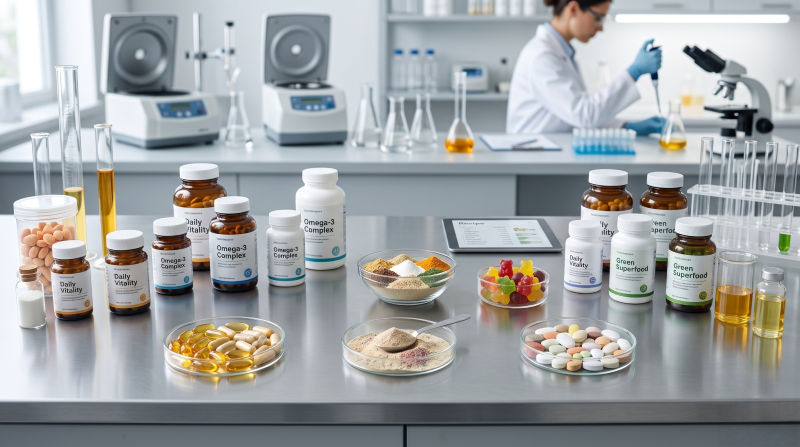
The Vitamin Manufacturing Process: From Raw Materials to Finished Products
Raw Material Procurement → Formula R&D → Production → Packaging
1. Raw Material Selection & Testing
2. Formula Research & Development
3. Production & Manufacturing Control
4. Packaging & Final Inspection
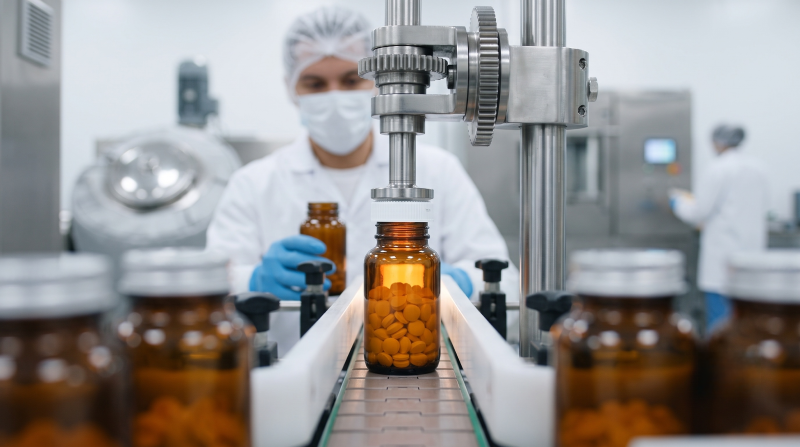
Vitamin Supplement Manufacturing by Dosage Form
Tablets, Capsules, Gummies and Liquids — Process Differences
Tablets
Capsules
Gummies
Liquids
Attribute
Tablets
Capsules
Gummies
Liquids
Production Complexity
Medium
Medium
High
Medium-High
Shelf Stability
Excellent
Good
Moderate
Moderate
Customization Flexibility
High
High
Medium
High
Typical MOQ
Moderate
Moderate
Higher
Moderate
Technical Challenges in Vitamin Supplement Manufacturing
Protecting Light-Sensitive and Heat-Sensitive Vitamins
Oxidation Prevention
Temperature Control
Moisture Protection
Light Sensitivity
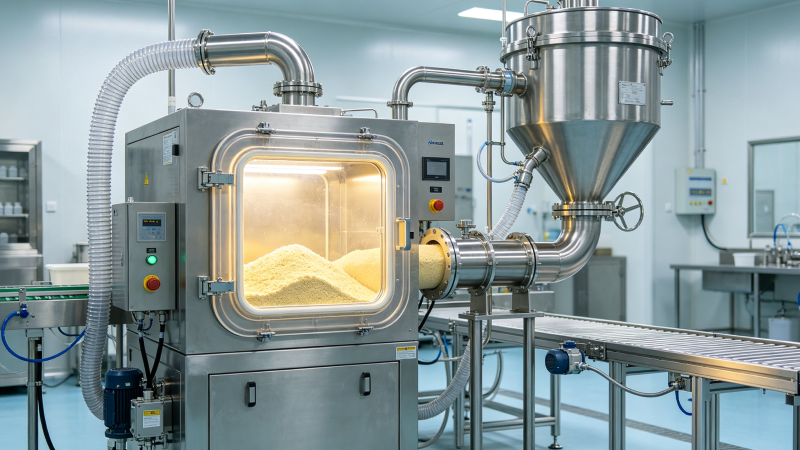
Quality Testing and Regulatory Compliance for Vitamin Manufacturers
Content Uniformity, Dissolution Testing and Stability Studies
Raw Material Testing
In-Process & Finished Product Testing
Stability Studies
International Regulatory Standards
How to Choose a Reliable Vitamin Supplement Manufacturer
Manufacturing Experience
R&D Capability
Quality System
Production Capacity
Customization Ability
Packaging Solutions
Communication Efficiency
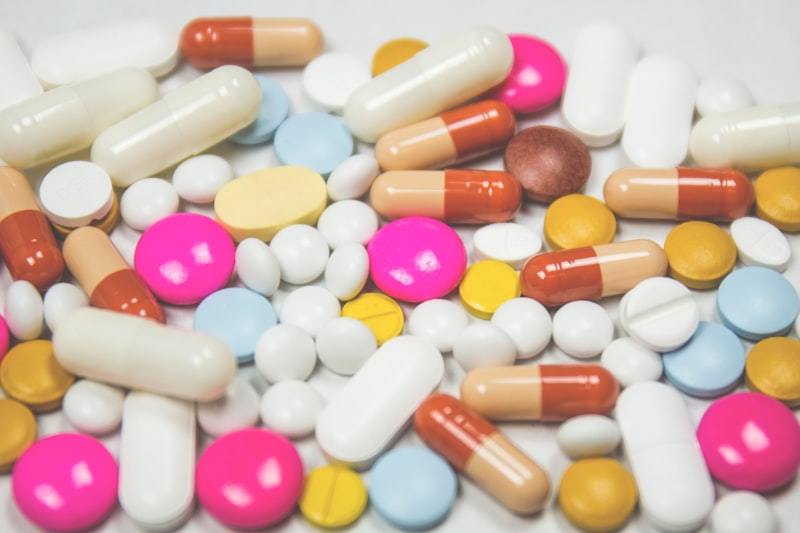
FORNUTRA — Your Vitamin Supplement Manufacturing Partner
OEM & ODM Services
Custom Formulation
Multiple Dosage Forms
Quality Control System
Global Brand Cooperation
Frequently Asked Questions
How do vitamin manufacturers ensure product quality?
What dosage forms can vitamin manufacturers produce?
How long does it take to manufacture a vitamin supplement?
What certifications should a vitamin manufacturer hold?
How do I choose a reliable vitamin manufacturing partner?
What is vitamin supplement manufacturing?